How to Build a Grow Light Maintenance Shutdown Evidence File
A service-readiness checklist for documenting grow light shutdown scope, energy-control evidence, fixture identity, controller settings, and release owners.
A grow light maintenance shutdown evidence file should answer one practical buyer question before work starts: which fixtures, controllers, circuits, settings, photos, and release owners prove that the service scope has been understood and controlled? Treat this as procurement and service documentation, not as a substitute for the facility's lockout/tagout program, electrical permit process, or qualified safety review.
1. Freeze the maintenance scope before touching product rows
Start with a plain scope line for every work area: inspection only, cleaning, connector check, controller setting review, fixture replacement, driver investigation, warranty triage, or post-install punch-list closeout. Then record who owns the shutdown decision, who is authorized to perform electrical work, which rooms or zones are affected, which crops or benches must be protected, and what evidence is required before lights return to normal operation. A vague note such as maintenance visit is not enough for a commercial grow facility.
2. Document hazardous-energy control as a facility procedure
OSHA's lockout/tagout standard covers servicing and maintenance where unexpected energization, startup, or stored-energy release could injure employees. OSHA also describes energy-control procedures as written instructions that identify the equipment, the type and magnitude of hazardous energy, shutdown steps, isolation methods, lockout or tagout application, verification, and employee notification. For a grow-light buyer, the evidence file should therefore reference the facility procedure and responsible personnel instead of asking a supplier article to define a safe work method.
3. Match the shutdown record to the exact fixture and controller
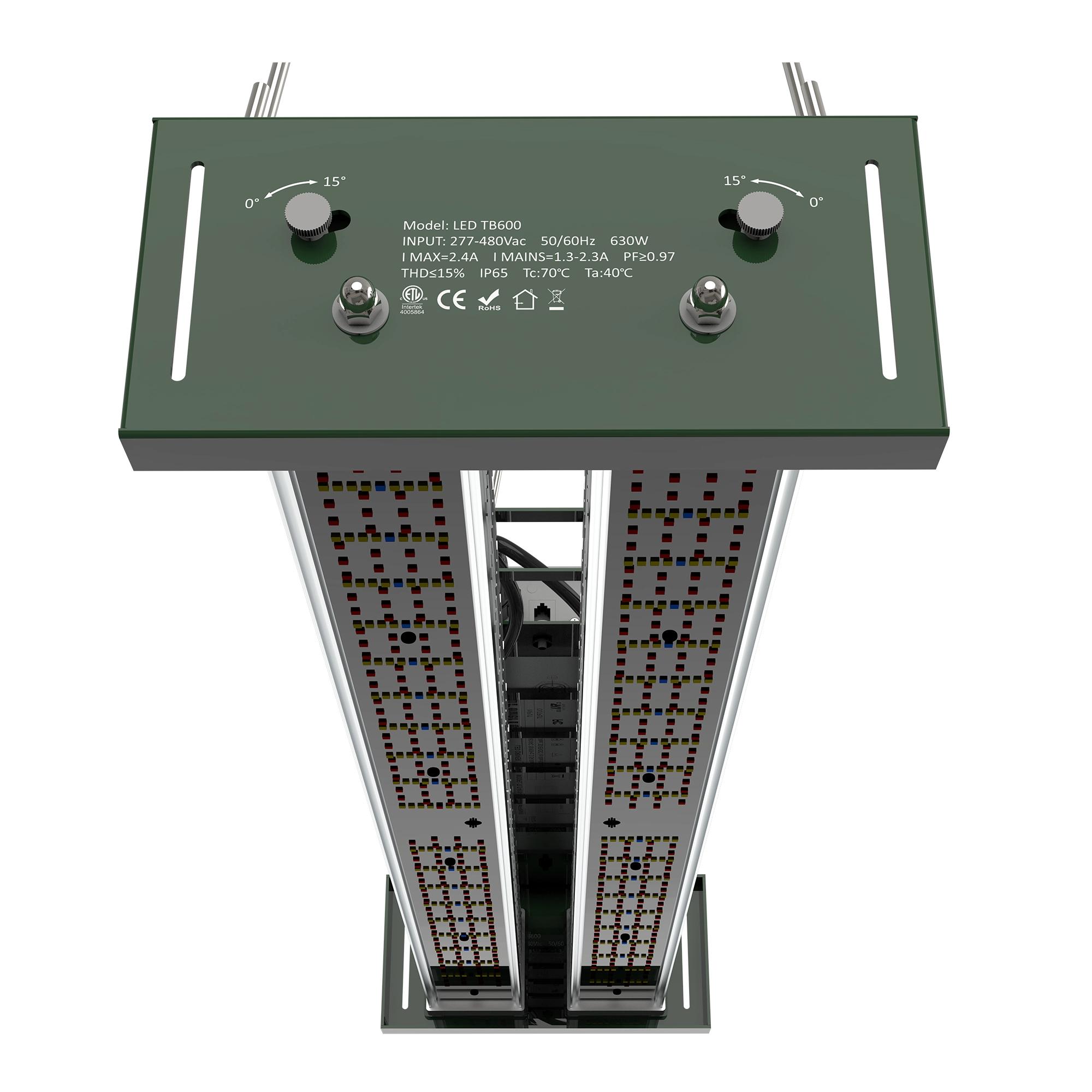
Current Sanity data lists the Number LED TB600 greenhouse toplight as a 600 W fixture with 2100 umol/s PPF, AC 200-480 V input, 150 degree beam angle, 0-10 V dimming, passive thermal management, 7.0 kg weight, and five-year standard warranty. Current Sanity data lists the Master Pro RS485 controller with a 12 V / 1 A adapter, two-way RS485 output, 7 inch display, -20 to 40 C and 0-90% RH operating range, IP54 protection, 20000 h listed lifespan, and two-year warranty. Use those rows to identify the equipment under review; do not treat them as proof that a maintenance procedure has been approved or that a shutdown is safe.
4. Capture control settings before changing anything
Before a controller, sensor, dimming line, or fixture group is serviced, photograph the controller screen, zone labels, dimming schedule, sunrise or sunset ramps if used, sensor assignment, exception alarms, and manual overrides. Record whether the service action is expected to preserve settings, reset a channel, replace a controller, or require recommissioning. This matters commercially because a fixture repair can become a crop-lighting dispute if nobody can prove what the schedule was before work began.
5. Record environment and access conditions
UL's horticultural lighting guidance highlights safety considerations that are specific to grow environments, including damp or wet locations, ingress protection, wiring and connection methods, photobiological effects, UV exposure of materials, and elevated ambient conditions. For a maintenance evidence file, capture room temperature if relevant, visible moisture exposure, cleaning schedule, mounting height, access method, cable strain, connector condition, and whether service will occur near irrigation or crop work. These observations help the buyer separate a product issue from installation, environment, or handling context.
6. Build the evidence table buyers can audit
For each serviced zone, record the facility name, room, bench or row, fixture model, product serial or batch reference, controller model, circuit or panel reference, service scope, shutdown window, affected crops, responsible maintenance lead, energy-control procedure reference, pre-service photos, post-service photos, settings backup, parts replaced, unresolved exception, and release owner. If any row is unknown, mark it as missing rather than filling the gap with a guess.
7. Send a service brief when the issue may affect future orders
If maintenance findings could change cable length, connector type, controller logic, label wording, mounting accessory, packaging, or spare-parts planning, turn the evidence table into an OEM/ODM project brief before the next sample or repeat order. The smallest useful brief includes the current product row, service photos, failed or changed component description, site condition, requested change, approval owner, and whether the change is for one facility or a future private-label standard.
Final review before work is closed
Before closing the maintenance ticket, confirm that the facility safety record, product identity, controller settings, environmental observations, service photos, parts record, and release owner all point to the same fixture group. If they do not, pause the commercial decision and ask for the missing evidence asset: a current product row, a controller settings export or photo set, a facility energy-control reference, or a signed service release from the responsible site team.