How to Build a Grow Light Photobiological Safety Evidence File
A practical OEM checklist for collecting grow light photobiological safety, spectrum, label, and worker-exposure evidence before LED fixture approval.
A photobiological safety review is easy to leave until the end of an LED grow light project, but that is exactly when spectrum, label, and installation assumptions are hardest to correct. OEM and private-label buyers should build an evidence file before approving the fixture, especially when a project uses high output, custom spectrum, UV, IR, dimming schedules, or worker access near the canopy.
1. Separate spectrum evidence from safety approval
A spectrum chart, PPF value, or PPE value does not by itself prove photobiological safety for a market, mounting height, room procedure, or label claim. IEC/EN 62471 is used as a framework for evaluating photobiological safety of lamps and lamp systems, including luminaires, while IEC 62471-7:2023 addresses assessment of electrical light sources and luminaires in normal use and specific conditions. Use those references as a buyer boundary: the file needs model-specific evidence, not only a marketing spectrum image.
2. Start with the exact Number product row
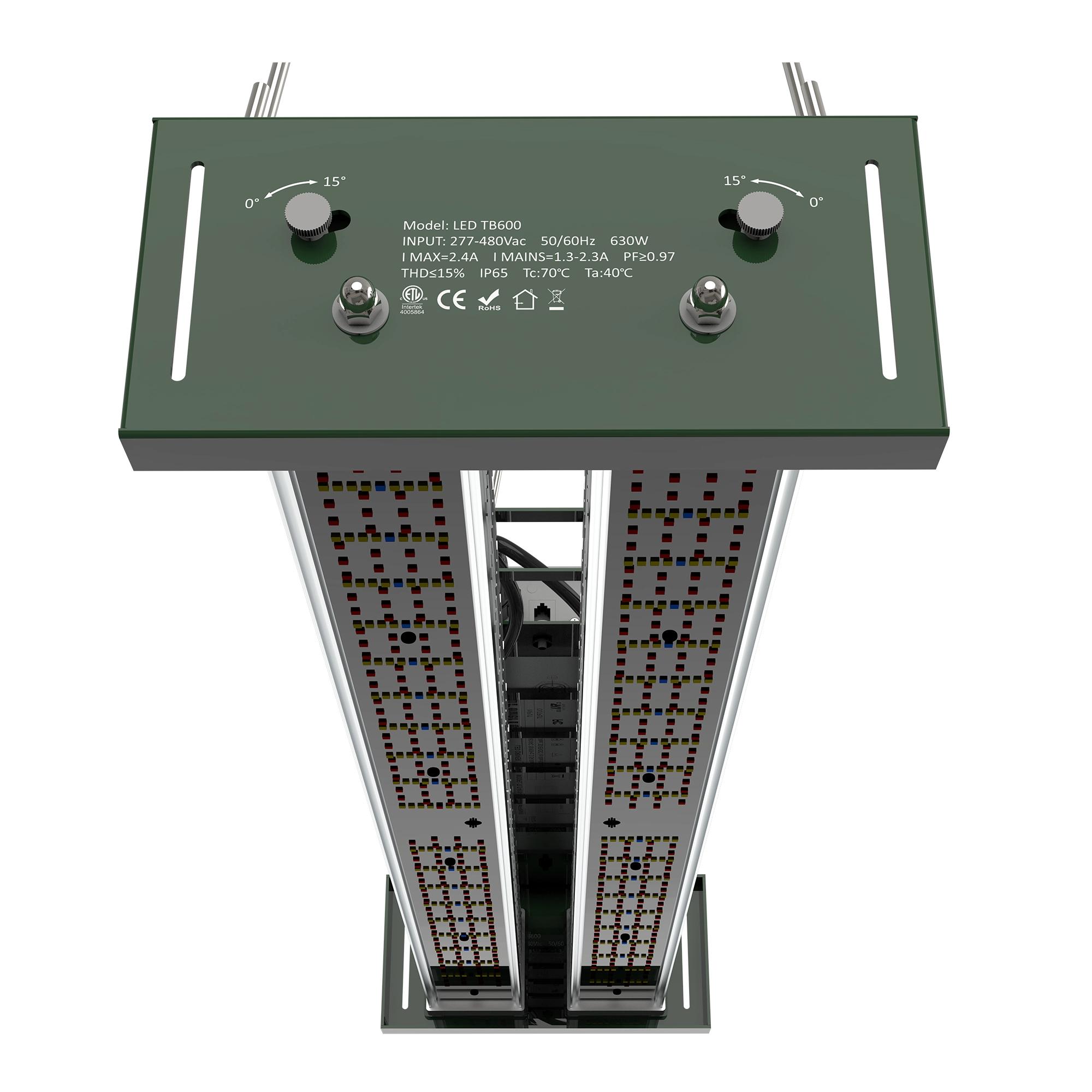
For greenhouse toplight projects, the current Number LED TB600 record lists 600 W +/-5% power consumption, 2100 umol/s PPF, 3.5 umol/J PPE or efficacy, full spectrum for greenhouse, AC 200-480 V input, 0-10V dimming, passive thermal management, and spectrum customization. For indoor fixture approvals, the current Number LED JT720F record lists 720 W power, 1950 umol/s PPF, 2.7 umol/J top-level efficiency, AC 220-240 V input, knob and 0-10V dimming, passive cooling, and spectrum customization. Those rows are useful starting evidence, but they are not a substitute for a photobiological report tied to the exact approved model and spectrum.
3. Lock the spectral version before testing
DesignLights Consortium horticultural requirements use spectral quantum distribution, PPF, PPE, product specification sheets, model identity, and safety documentation as part of the fixture evidence environment. In purchasing terms, that means the buyer should freeze the spectrum recipe, model number, driver setting, dimming state, optical file, label text, and sample revision before treating a report as approval evidence. Any red-heavy, UV, IR, or customer-specific spectrum should get its own row or a written engineering justification.
4. Describe the real worker-exposure case
The evidence file should describe where people are during normal operation: aisle work, crop scouting, harvest, maintenance, cleaning, controller setup, and emergency service. Record mounting height, fixture angle, dimming schedule, access distance, protective procedures, and whether lights can remain on while staff work under or beside the canopy. If the use case changes, the evidence row should change too.
5. Connect reports to labels and manuals
A buyer-ready file should include the report identifier, tested sample identity, spectrum version, safety or risk wording supplied by the laboratory or compliance reviewer, product label draft, carton label draft, installation manual section, and any required warnings or operating conditions. Do not let an artwork file say more than the test file supports.
6. Use the open rows to guide OEM discussion
Before mass production, mark each row as supplied, buyer-reviewed, or still open: exact model, spectrum recipe, optical report, photobiological assessment, label wording, manual wording, installation assumptions, dimming schedule, and worker-access notes. If any row is missing, use Number's OEM/ODM project discussion to request the smallest next evidence asset rather than approving a broad claim.
Buyer checklist
Before approval, ask for the exact sample identity, frozen spectrum version, optical report, photobiological safety evidence or evidence owner, label and manual wording, intended installation and worker-access assumptions, and a revision log. Approve only the rows that are actually supported. Everything else should remain an open action, not a sales claim.