How to Check Grow Light Power Factor Before Utility Review
A commercial grow-light procurement checklist for verifying power factor, model scope, and electrical submittal evidence before utility review.
Power factor should be checked before a commercial greenhouse LED order is sent into electrical, utility incentive, or OEM approval review. It is an electrical-quality field, not a crop result, savings guarantee, certification listing, or substitute for a stamped electrical design. The buying question is simple: which exact model has a verified power-factor value, under what input-voltage condition, and where will that evidence appear in the project file?
1. Start with the exact model that has a verified value
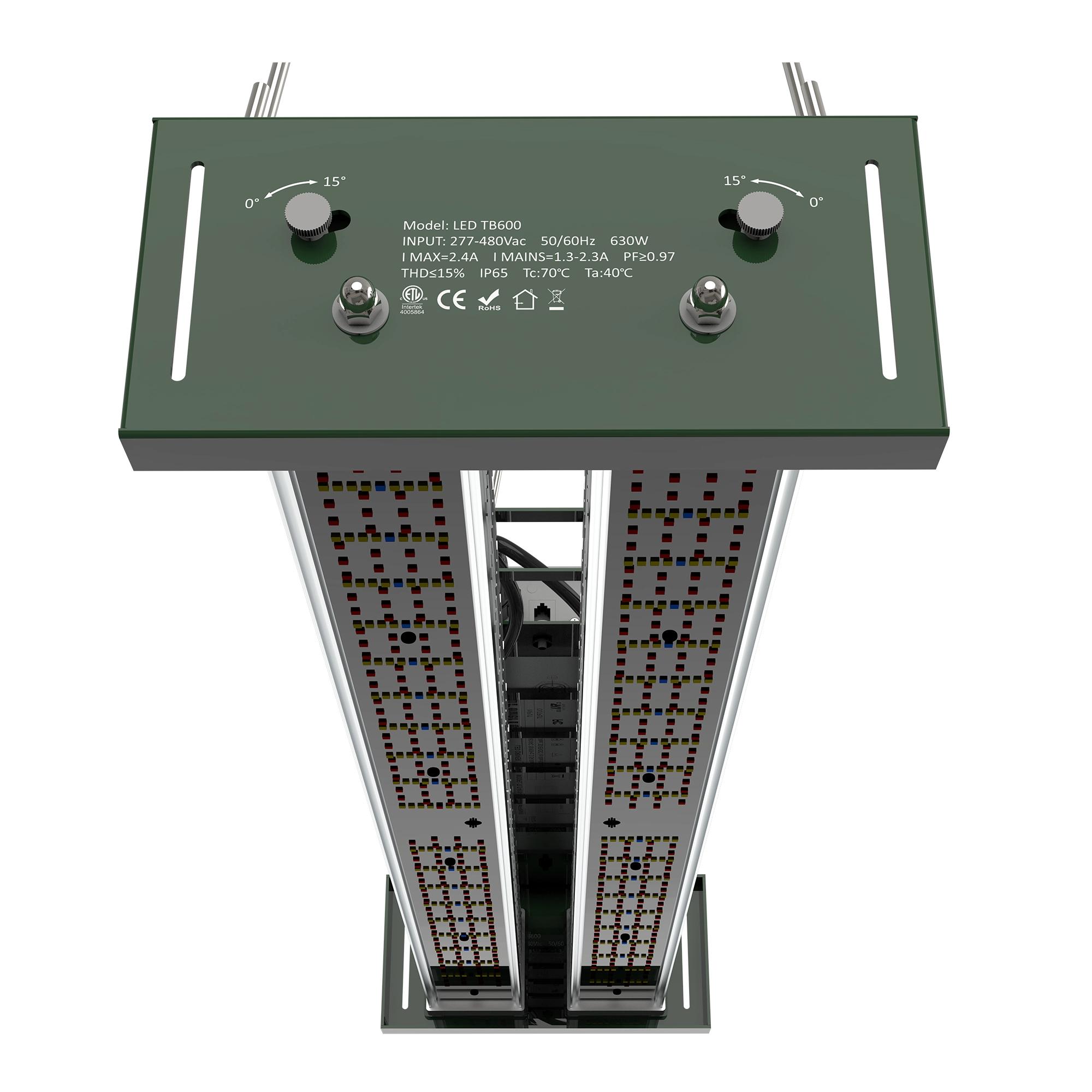
Current Sanity product data lists the LED TB600 greenhouse toplight with 600 W power consumption, AC 200-480 V input voltage, 2100 micromoles per second PPF, 3.5 micromoles per joule PPE, 150 degree beam angle, full spectrum for greenhouse, 0-10 V dimming, passive thermal management, and a power factor of at least 0.97. Keep those values tied to the TB600 record and quote line; do not copy the 0.97 value across a different wattage or private-label variant unless its own record or datasheet confirms it.
2. Treat a missing power-factor field as an evidence request
For comparison, the current LED TB830 greenhouse toplight record lists 830 W power consumption, 2910 micromoles per second PPF, 3.5 micromoles per joule efficacy, -20 C to 35 C operating temperature, passive thermal management, 0-10 V dimming, and a 5-year standard warranty, but it does not show a power-factor line in the retrieved Sanity specifications. That absence is not a failure and not a negative claim. It means the buyer should request a model-specific datasheet, LM-79 or power-quality report where applicable, or a signed submittal line before using the value in an electrical schedule.
3. Ask what the reviewer actually needs
A utility, electrical engineer, or incentive reviewer may ask for more than one field: input-voltage range, maximum input power, power factor, total harmonic distortion if required, dimming method, driver configuration, fixture count, and the operating state used for the measurement. The DesignLights Consortium horticultural program uses product performance, controllability, and reporting requirements to support energy-efficiency adoption in controlled environment agriculture; its surveillance policy also treats power factor as a technical-requirement metric alongside PPE and current THD. Use that as a reason to keep evidence organized, not as permission to state a listing or rebate outcome that has not been verified for the specific model.
4. Build a power-quality schedule before approval
For each fixture line, record the product ID, model name, wattage, voltage range, stated power factor, measurement source, document date, dimming protocol, fixture quantity, and the person who approved the submittal. Add a second column for fields that are not yet verified. This prevents a quotation table from looking more complete than the evidence file and gives procurement a small checklist to close before deposit or mass-production approval.
5. Re-check the value after OEM changes
Power factor can become unclear when a buyer changes the driver, wattage, voltage option, dimming interface, cable configuration, or private-label model number. If the project uses OEM or ODM customization, ask for the approved electrical data to be reissued with the customized model code. Do not rely on a parent fixture's power-factor value after a performance-affecting change unless the supplier can identify why the value still applies.
Approval checklist
Approve the order only after the exact model has a power-factor value or an explicit gap note, the value is tied to voltage and wattage, the document source is named, the reviewer has the same fixture quantity used in the electrical schedule, and customized variants have their own evidence. The next action is to send Number the model list and required utility or engineering template so the power-quality fields can be checked before the order is finalized.