How to Check Grow Light Weight Before Mounting Approval
Verify grow light weight before mounting approval with current TB600, JT720F, and F120 specs, support zones, hardware, and submittal evidence.
Commercial grow-light orders often fail late in review for a simple reason: the lighting schedule lists wattage and PPF, but the mounting package does not show the real fixture weight, hanger assumptions, or who has approved the structure. Weight is not a crop-performance claim. It is a project-control detail that affects truss loading, rack accessories, labor planning, packaging, and final signoff.
For a purchasing or engineering team, the right question is not “is this fixture light?” It is: which exact model weight is verified, what hardware will be added to it, where will each suspended load sit, and what evidence will the installer or greenhouse builder accept before release? OSHA suspended-load rules such as 29 CFR 1926.1425 and 1926.753 are useful safety context because they treat overhead loads and worker exposure as planning issues. They do not replace local engineering review, but they reinforce why suspended equipment should be documented before installation.
Use this checklist when a commercial greenhouse, indoor room, vertical rack, or under-canopy rollout needs mounting approval before a purchase order.
Start with the exact model record
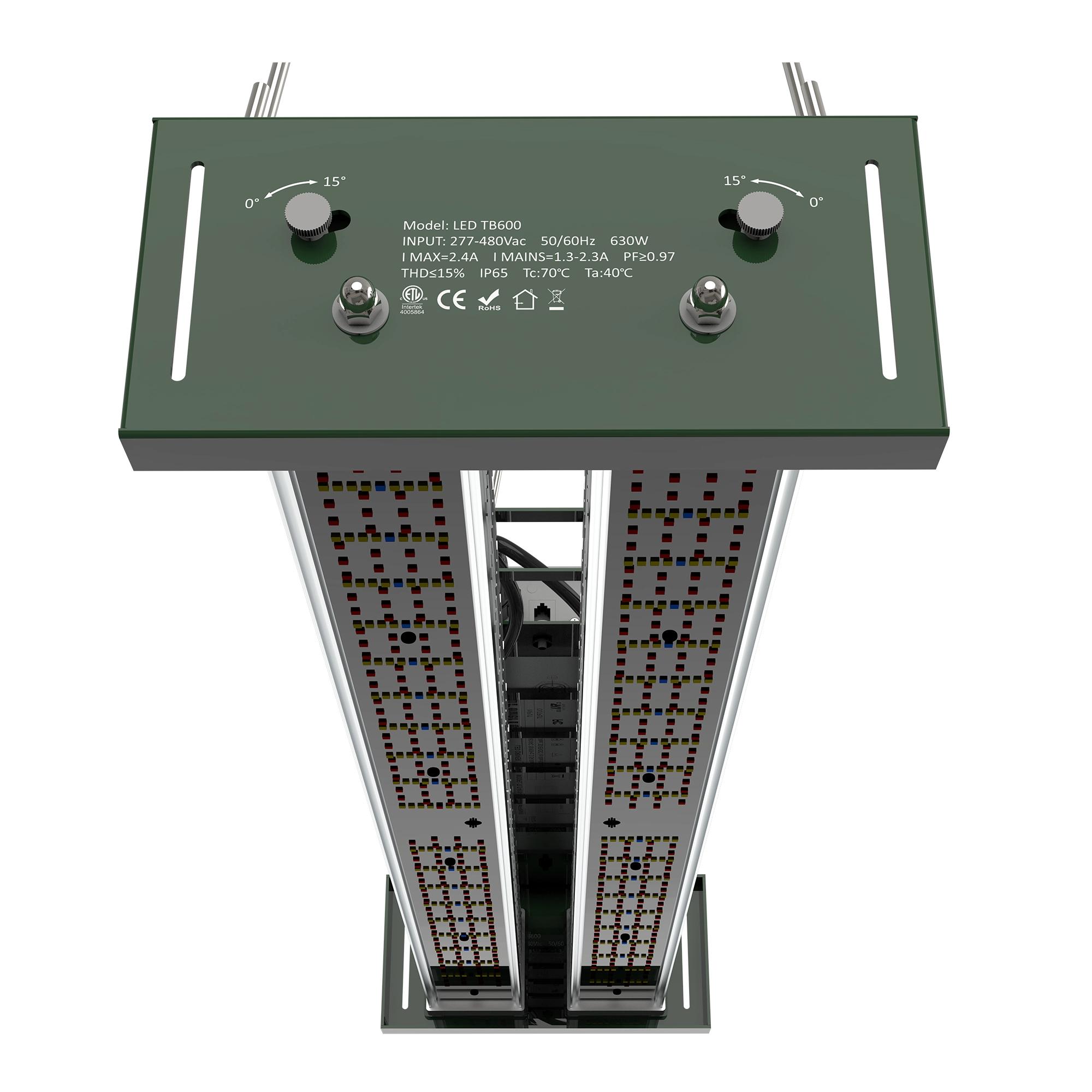
Do not approve a fixture family name alone. Pull the model ID, rated power, PPF or output range, dimming method, and weight from the current product record or datasheet. For example, Number’s current Sanity product data retrieved on 2026-08-17 lists the LED TB600 greenhouse toplight as 600 W with 2100 umol/s PPF, 0-10 V dimming, passive thermal management, and a verified weight of 7.0 kg. That is the number to put into the mounting schedule for the TB600 model, not a rounded family estimate.
If a record contains a range, split the approval line by configuration. A multi-wattage family, optional spectrum, or special housing should not inherit another version’s weight unless Number confirms the final build. Keep the product ID and retrieval date in the submittal so a reviewer can trace the source.
Separate fixture weight from installed load
Fixture weight is only the base. The installed load can include brackets, hooks, cables, safety wires, connectors, plant-light controllers, junction boxes, drip loops, and any on-site adapter hardware. Ask the installer to list those additions separately. This avoids two common errors: using the fixture weight as if it includes every accessory, or adding a generic allowance that no one can verify later.
Indoor foldable fixtures need the same treatment. The current Sanity record for the LED JT720F lists 720 W, 1950 umol/s PPF, knob and 0-10 V dimming, passive cooling, and a weight of 6.6 kg. If a room uses alternate hanging kits, logo customization, or cable-length customization, those changes should be reviewed as installed-package details instead of being silently absorbed into the fixture line.
Map weight to the actual mounting points
A project schedule should show where each fixture hangs, not only how many fixtures are in the room. Greenhouse toplights may be assigned to trusses or purlins; indoor fixtures may be assigned to rolling benches, ceiling channels, or rack frames; under-canopy lights may mount to benches or crop-support hardware. The approval package should identify the support member, mounting height, hanger spacing, and any zone where access paths or service work place people below suspended equipment.
When fixture counts are high, calculate by bay, rack, or row. A single fixture may be light enough for handling, while twenty fixtures concentrated on one support member may require structural confirmation. Keep the calculation simple: verified fixture weight, added hardware allowance, fixture count per support zone, and the reviewer responsible for accepting the result.
Use weight to expose layout trade-offs
Weight review is also a useful way to compare layout options without making unsupported performance promises. If two layouts deliver the requested electrical and light-output envelope, the lighter installed package may reduce handling complexity or make maintenance access easier. If the heavier package gives better fit for the room geometry, the approval file should show why the mounting structure and installation method can support it.
Under-canopy projects need this discipline because fixtures are distributed through occupied working zones. Number’s current Sanity record for the LEDex-F120 DeepLock under-canopy light lists 120 W, 360 umol/s PPF, 0-10 V dimming, passive thermal management, and a weight of 2.5 kg. For a rollout, document the number of units per bench or row, the connector and cable routing, and the support hardware before approving a room-wide order.
Request the smallest evidence package
A practical mounting-approval packet should include: the model-specific product record or datasheet; the verified fixture weight; a list of mounting accessories included and excluded from that weight; a plan view or rack drawing that assigns fixtures to support zones; the installer’s hardware selection; and the name of the person or firm accepting the structural and safety review.
If the order is OEM or customized, add a sample-build check. Weigh the final sample with the same housing, driver position, cable set, connector style, bracket, and label package intended for production. Record the measured value, sample date, and serial or build reference. Do not reuse catalog weight if the physical build has changed.
Decision checklist before release
Approve the order only when each fixture line has a verified weight, every accessory weight is either included or separately allowed, each support zone has a fixture count, the installer has named the hanging hardware, and the reviewer has accepted the structure for the installed package. If any of those items is missing, the smallest next evidence asset is usually not another marketing page. It is a one-page mounting submittal tied to the exact product IDs and final accessory list.
For Number projects, ask for model-specific product data and mounting assumptions in the same review cycle as light layout and electrical review. That keeps the purchasing decision connected to the real installation constraints instead of discovering the issue after fixtures arrive on site.
Evidence note: Number product specifications cited above come from current Sanity product records retrieved on 2026-08-17 for product IDs 6e55a011-7b6d-4f38-811a-5678dbfcb52b, 73f39010-0baa-4b4e-868b-921c3a0e2907, and 07dfd911-1bba-4d49-a303-6f11468a5c00. OSHA references are used only as general suspended-load safety context, not as product certification or installation approval.