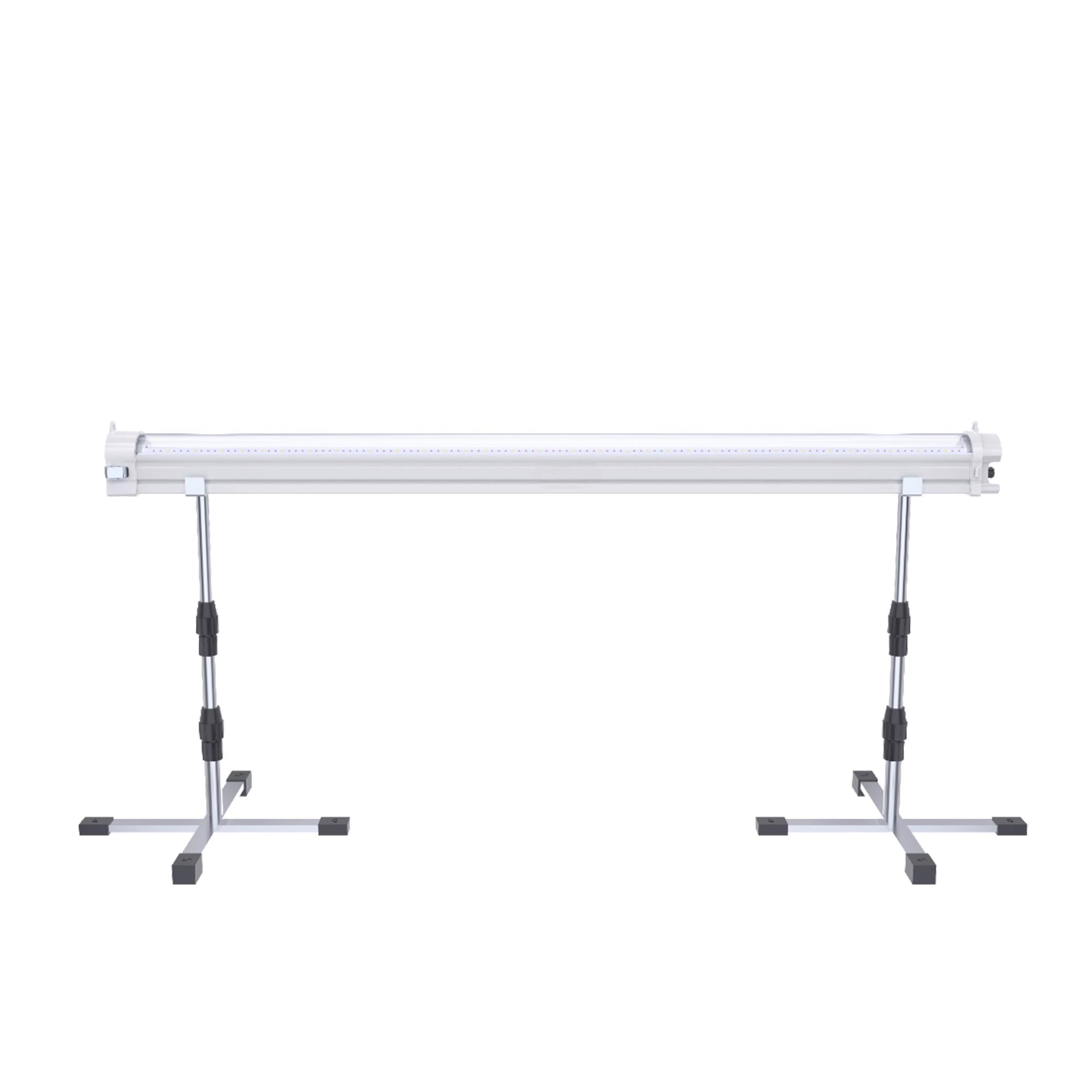
How to Choose Between 120W Under-Canopy LED Grow Lights
A model-selection checklist for comparing two 120W under-canopy LED grow lights using verified specs, customization rows, and evidence requirements.
Two under-canopy fixtures can share the same 120 W power class and still require different approval rows. Before a commercial grow room orders samples or releases a full rollout, the buyer should compare the exact model record, verified output, customization options, control method, and evidence needed for the installation file.
1. Separate the two 120 W F120 records
Use the full product identity, not only “F120” or “120 W under-canopy bar.” Current Sanity data lists the LEDex-F120 4ft 120 cm under-canopy LED grow light and the LEDex-F120 DeepLock 120 W under-canopy LED grow light as separate product records. Put the product ID, product name, and selected option package into the sample request so the factory, buyer, and installer are reviewing the same item.
2. Compare verified output rows before layout work
The current F120 record lists 120 W +/-5% power consumption, 336 micromoles per second PPF, 2.8 micromoles per joule efficacy, 0-10 V dimming, passive thermal management, -20 C to 35 C operating temperature, 2.2 kg weight, and five-year standard warranty. The DeepLock F120 record lists 120 W +/-5% power consumption, 360 micromoles per second PPF, 3.0 micromoles per joule efficacy, 0-10 V dimming, passive thermal management, -20 C to 35 C operating temperature, 2.5 kg weight, and five-year standard warranty. Treat those as fixture specifications only; they are not a crop-yield promise or a substitute for a room-specific PPFD map.
3. Match the model to the customization request
The two records do not show the same customization rows. Current Sanity data lists logo, cable length, and mounting for the F120 4ft 120 cm record. It lists spectrum, size, color, and dimming for the DeepLock F120 record. If the purchase depends on a custom bracket, harness length, housing color, or spectrum, make that requirement a named line item in the sample brief instead of assuming it applies to both 120 W models.
4. Ask for the evidence packet by claim type
Sanity product fields can support the model name, power, PPF, efficacy, dimming method, weight, operating temperature, warranty duration, and listed certification fields. They do not independently prove current certificate scope, chain length, waterproof test results, connector durability, customer yield, installation approval, or utility eligibility. If any of those claims will appear in an import file, label, distributor page, or cultivation trial plan, request the separate certificate, drawing, test report, inspection photo, or room-specific layout document before approval.
5. Turn the comparison into a sample decision
For a simple model-selection brief, create one row for each candidate fixture and score the verified specs, required customization, missing evidence, control method, mounting hardware, and release blocker. If the buyer needs a private-label or modified version, move the approved row into an OEM or ODM grow light discussion with the exact product ID and the evidence assets still required. The practical next action is to approve one sample configuration, block every unsupported claim, and request the missing evidence before scaling the order.