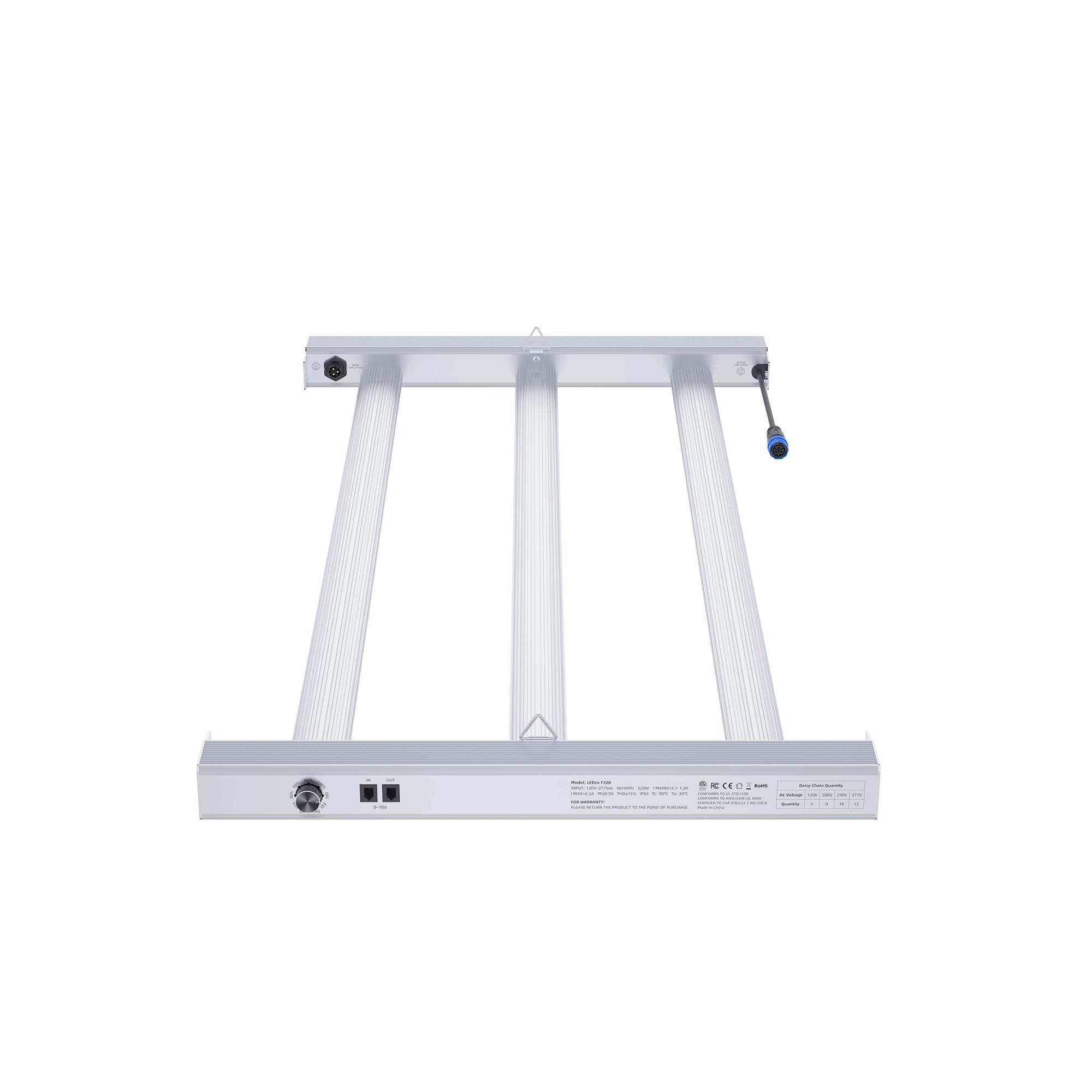
How to Choose Between F320 LED Grow Light Bars
A procurement checklist for choosing between Number LEDzx F320 indoor grow-light bars and LEDtb F320 greenhouse toplight rows before quote approval.
F320 is not enough information for a purchase order. Number has two current F320 product rows that can sit in very different project conversations: the LEDzx F320 indoor grow-light bar and the LEDtb F320 greenhouse toplight. A buyer should choose the row by application, verified output, controls, environmental fit, mounting evidence, and quote documentation before asking for samples or private-label artwork.
1. Start with the installation role, not the shared F320 name
Use the Number LEDzx F320 row when the project brief is an indoor grow-light bar conversation and the buyer needs connection, cable, and control planning for repeated rows. Use the Number LEDtb F320 row when the brief is a greenhouse toplight or low-profile greenhouse fixture conversation. Do not let the common F320 label replace the application row in the quote sheet.
2. Compare only the verified product fields
Current Sanity data lists the LEDzx F320 at 320 W plus/minus 5 percent, 800 to 930 micromoles per second PPF, 2.5 to 2.90 micromoles per joule efficacy, passive thermal management, 0-10 V dimming, -20 C to 35 C operating temperature, 3.5 kg weight, and five-year standard warranty. The LEDtb F320 row is listed at 320 W, 1120 micromoles per second PPF, 3.5 micromoles per joule efficacy, passive thermal management, 0-10 V dimming, -20 C to 35 C operating temperature, 3.0 kg weight, and three-year standard warranty.
3. Separate fixture output from crop light at canopy level
University of Missouri Extension explains PPF as fixture photon output, while PPFD and DLI describe light delivered to the crop over space and time. That distinction protects the buying decision: LEDtb F320 has the higher listed PPF row, but final crop light still depends on fixture spacing, mounting height, obstruction, dimming schedule, and measured uniformity. Require a layout or measurement plan before converting either F320 product row into fixture quantity.
4. Treat connection language as an evidence request
The LEDzx F320 product name and description position it around connected indoor grow-light rows. Before rollout, ask Number to lock the cable length, connector type, driver arrangement, circuit allocation, controller channel, dimming method, and maximum approved group for the actual voltage and room plan. Do not use a catalogue phrase as the installation limit unless the order evidence pack states the allowed configuration.
5. Keep customization, compliance, and warranty rows separate
Current fields list LEDzx F320 customization options for spectrum, power, logo, and color; LEDtb F320 lists spectrum, color, cable length, and dimming. Current certification arrays list DLC and RoHS for LEDzx F320, and CE and RoHS for LEDtb F320. Treat those as first-party catalogue fields. For import, utility, or private-label approval, request the model-specific declaration, report, label artwork, and certificate or listing scope that matches the exact SKU.
6. Put the decision into a quote-ready F320 row
A clean F320 approval row should include product ID, model name, application, power, PPF, efficacy, dimming method, operating temperature, thermal management, weight, warranty, customization options, certification fields, mounting plan, cable plan, and the evidence owner for each document. If the buyer needs private-label packaging, spectrum changes, cable changes, or fixture grouping changes, move the request into an OEM/ODM project discussion before sample release rather than editing the purchase order after approval.