How to Choose Between Greenhouse Toplights and Low-Profile Grow Bars
A greenhouse fixture-form checklist for choosing between high-output toplights and low-profile grow bars using verified Number product rows.
A greenhouse buyer may compare high-output toplights and low-profile grow bars when the same crop area has competing constraints: photon output, mounting height, fixture weight, screen clearance, service access, wiring, and control zones. The right first question is not which model looks stronger on a spec sheet. It is which fixture form can be laid out, powered, mounted, cleaned, dimmed, and measured in the actual greenhouse bay.
1. Start with the greenhouse constraint
Write down the bay dimensions, crop stage, target photoperiod or DLI method, available sunlight, crop-height measurement point, mounting height, shading from screens or structure, and maintenance access before selecting a product row. University of New Hampshire Extension frames supplemental-light runtime around greenhouse sunlight transmission, crop DLI need, measured lamp intensity, and hours of operation. That makes the fixture choice a layout and measurement question, not a wattage-only decision.
2. Use toplights when output density is the main driver
Current Sanity data lists the Number LED TB600 greenhouse toplight as 600 W +/-5 percent with 2100 micromoles per second PPF, 3.5 micromoles per joule efficacy, AC 200-480 V input, 150 degree beam angle, 0-10 V dimming, passive thermal management, -20 C to 35 C operating temperature, 7.0 kg weight, and a five-year standard warranty. Current Sanity data lists the Number LED TB830 greenhouse toplight as 830 W +/-5 percent with 2910 micromoles per second PPF, 3.5 micromoles per joule efficacy, 0-10 V dimming, passive thermal management, -20 C to 35 C operating temperature, 11.2 kg weight, and a five-year standard warranty. These rows support a high-output layout review; they do not prove a final fixture count or crop result.
3. Use low-profile bars when geometry is the main risk
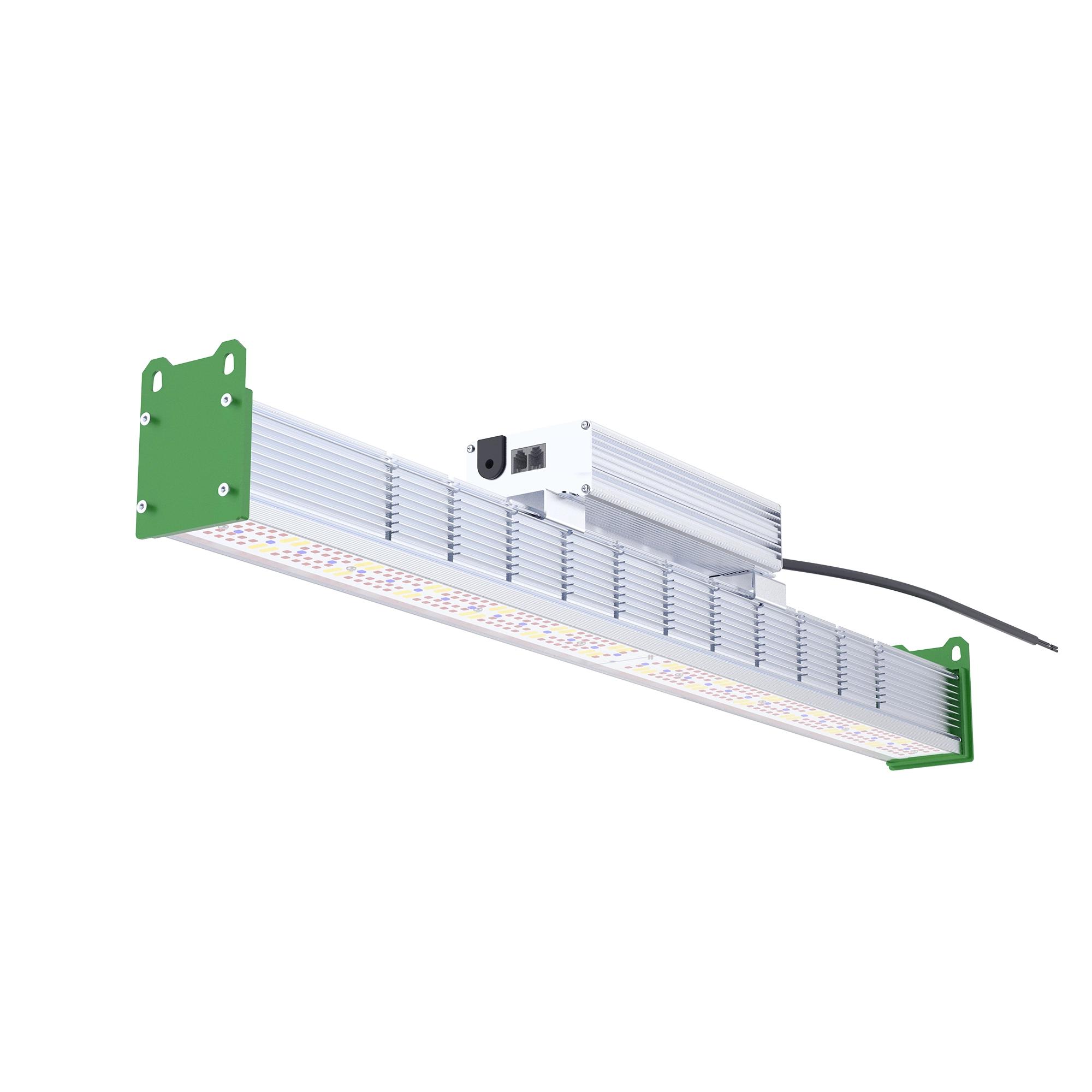
Current Sanity data lists the Number LEDtb F320 low-profile greenhouse light as 320 W with 1120 micromoles per second PPF, 3.5 micromoles per joule efficacy, 0-10 V dimming, passive thermal management, -20 C to 35 C operating temperature, 3.0 kg weight, and a three-year standard warranty. Its product text positions it for long-day lighting and limited hanging height or low-profile greenhouse use. Treat that as a form-factor reason to request a layout, not as proof that it will meet a crop target without PPFD measurements.
4. Build a form-factor comparison table
A useful buyer table has one row per candidate model and columns for intended bay, crop stage, mounting height, structure load limit, fixture weight, verified PPF, wattage, input-voltage evidence if present, dimming method, beam or distribution assumption, cleaning exposure, screen or curtain conflict, service clearance, control zone, and missing evidence owner. Do not merge a toplight and a bar into one quote line unless the layout shows how each form factor will be used.
5. Keep customization separate from base specs
Sanity currently lists TB600 and TB830 as customizable for spectrum, power, size, logo, color, cable length, dimming, and mounting. It lists LEDtb F320 as customizable for spectrum, color, cable length, and dimming. If a buyer changes spectrum, cable length, mounting, label, or housing color, request a configured product row or sample record before copying base-model values into the approval sheet.
6. Ask for layout evidence before approval
DLC horticultural lighting requirements are useful context because product-level data and controllability details matter in fixture evaluation. For this Number comparison, the smallest useful evidence packet is a bay-specific layout drawing, verified candidate product rows, expected mounting method, electrical-load note, control-zone note, and a measurement plan for crop-height PPFD after installation. Without those rows, choose a starting product family only; do not approve final quantities.
Next action
Before requesting a quote, send Number one greenhouse bay row with the crop target, mounting limit, fixture-form preference, control-zone requirement, and any missing evidence. Number can then compare the toplight and low-profile bar rows against the real layout instead of quoting from wattage alone.