How to Define Grow Light Control Zones Before Choosing a Controller
A control-zone checklist for commercial grow rooms choosing between 0-10 V dimming and RS485 lighting control, using verified Number controller specifications.
A grow light controller should be selected after the control zones are defined. In a commercial room, the important question is not only whether the controller supports 0-10 V dimming or RS485. The project team needs to know which fixtures should act together, which areas need independent schedules, and what should happen when temperature, crop stage, or maintenance access changes.
Start with zones, not the controller model
A lighting control zone is a group of fixtures that should follow the same intensity, schedule, and safety response. Separate zones when crops, fixture models, canopy height, target PPFD, HVAC behavior, irrigation timing, or access constraints differ. If two benches need different dimming curves or different photoperiods, they should not be forced onto one channel just because the wiring is convenient.
Control-zone checklist before procurement
- Map each fixture group by crop area, fixture model, mounting height, and expected photoperiod.
- Record the target PPFD or DLI plan, then decide whether the zone needs manual dimming, scheduled dimming, sensor-based response, or room-level automation.
- Confirm the dimming input on every fixture, including connector type, cable length, channel count, and whether the fixture needs power switching to turn fully off.
- Plan labels, service access, and a commissioning sheet so operators can identify which fixtures respond to each controller output.
When 0-10 V control is enough
A 0-10 V controller is usually the simpler choice when a group of fixtures can move together as one zone. Number current Sanity product data lists the LuxMind 3CH Controller with 12 V input, two groups of 0-10 V dimming output, RJ11 plus RJ45 connections for 3-channel dimming, an optional temperature sensor per group, IP54 protection, and a 20,000 h average lifespan. Use that type of controller when the room needs grouped dimming and the fixture drivers, cables, and channels are already compatible.
Do not treat 0-10 V as a complete control design by itself. Before ordering, verify the number of fixtures per channel, cable run length, fail-safe behavior, minimum dimming level, and whether any zone needs independent feedback from an environmental controller.
When RS485 belongs in the discussion
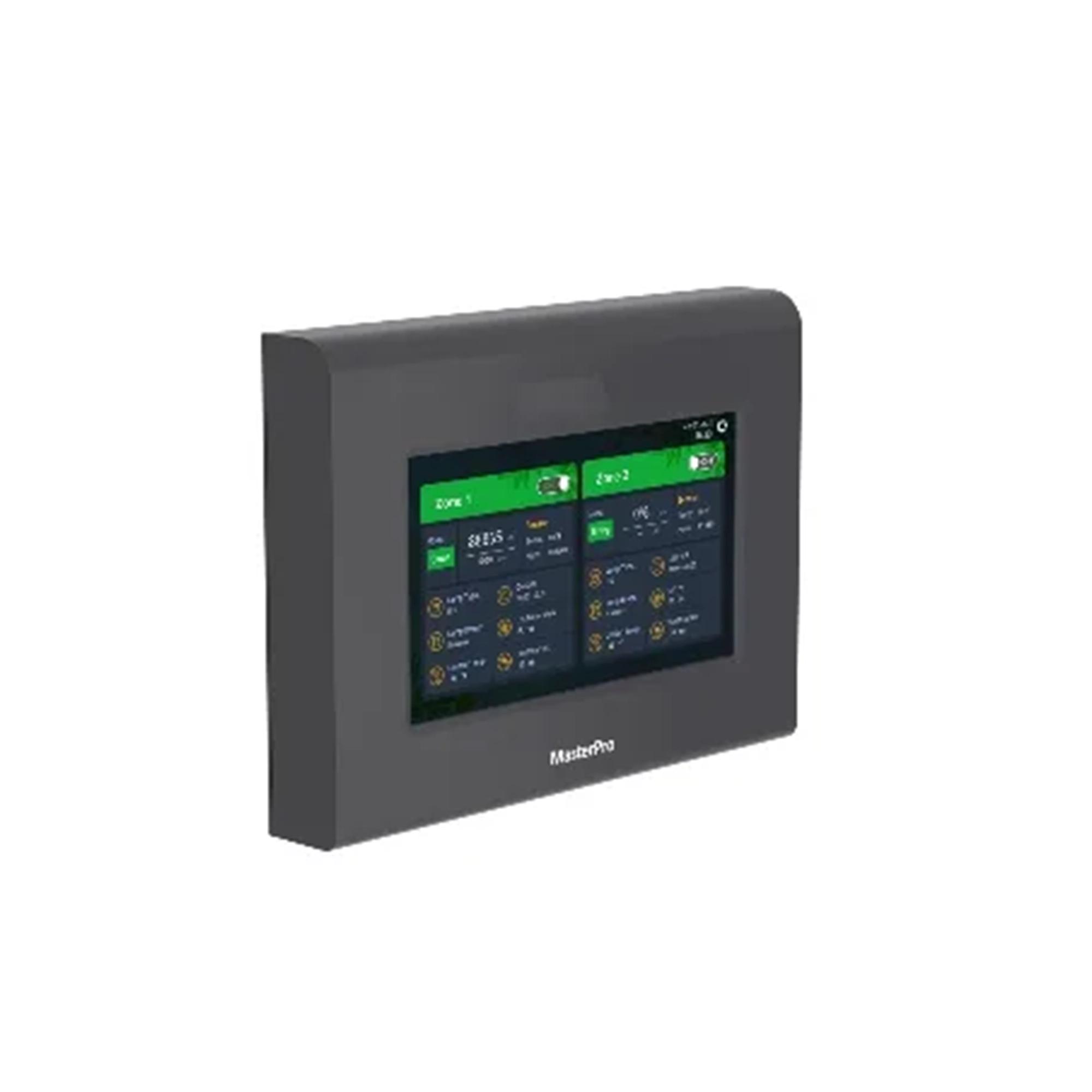
RS485 is worth evaluating when the room needs a more structured digital control layer, clearer room-level interface, or integration planning beyond a simple dimming group. The current Number record for the Master Pro Controller Number RS485 Signal Dimming Controller lists a 7 inch 1024 x 600 display, 2-way RS485 output, 12 V / 1 A power through a 100-240 VAC adapter, -20 °C to 40 °C operating range, 0-90% RH operating range, IP54 protection, and a 2-year warranty. Those are controller specifications, not a guarantee that every fixture or building-management system will communicate without project validation.
Check fixture compatibility before approving the controller
The fixture data must agree with the control plan. For example, the Number LED TB600 greenhouse toplight is currently specified in Sanity at 600 W, 2,100 μmol/s PPF, 3.5 μmol/J efficacy, AC 200-480 V input, 0-10 V dimming, power factor of at least 0.97, passive thermal management, and a 5-year standard warranty. Those values help a designer screen compatibility, but the final controller selection still needs a wiring diagram and commissioning test for the exact fixture mix.
Commission the zones before full operation
After installation, test one zone at a time. Record the controller output, fixture response, measured PPFD at representative canopy points, temperature-sensor response where used, recovery after power interruption, and any mismatch between labels and actual fixture behavior. Keep the first commissioning sheet with the project file because it becomes the reference for later troubleshooting and expansion.
Source and scope note
Product specifications in this article were checked against current Sanity records on July 22, 2026 for Number product IDs 441fb835-0932-4853-b5a5-7120e6611fe1, 6298d040-4385-40a2-8642-38173ae9c274, and 6e55a011-7b6d-4f38-811a-5678dbfcb52b. For general context, DLC horticultural lighting requirements include product-level controllability reporting, and Virginia Cooperative Extension DLI guidance frames supplemental lighting around target DLI, PPFD at crop height, light losses, and operating hours. This article does not claim yield improvement, energy savings, certification status beyond the linked product records, or compatibility with a specific third-party control system.
Next action for a project team
Send Number the fixture schedule, room map, target zones, preferred dimming method, and any environmental-control requirements. The useful output is not a controller name by itself; it is a zone map, wiring concept, and list of compatibility checks to close before purchase.