Light: Nature’s Silent Architect in the Plant World
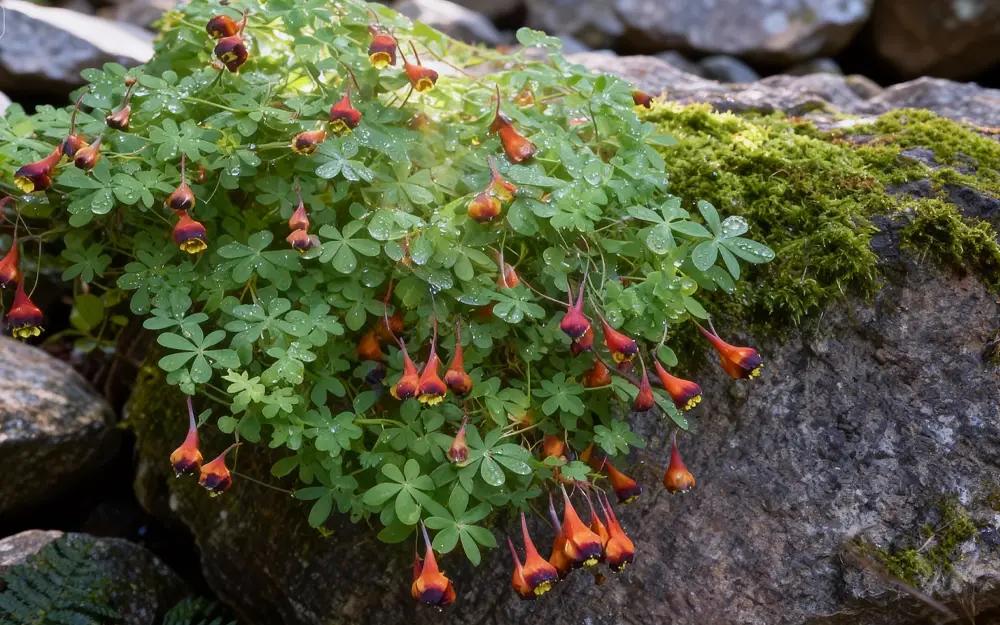
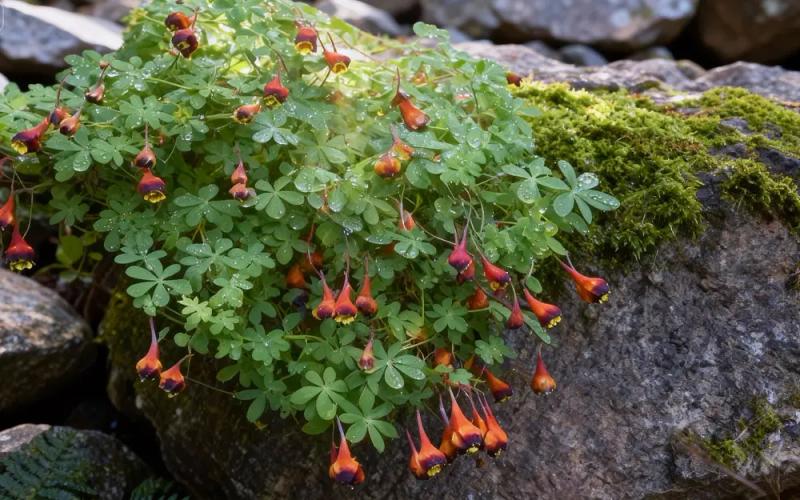
Deep in the misty forests straddling Chile and Argentina, a botanical marvel unfolds: Tropaeolum tricolor vines don’t just climb—they mimic. Their leaves seamlessly echo the shape and hue of whatever plant they embrace—round if the host is oval, slender if the neighbor’s foliage is lanceolate. Remarkably, they even adapt to artificial plastic leaves, as if “reading” their surroundings through light alone.
This isn’t illusion—it’s precision biology. Plants like T. tricolor interpret subtle variations in reflected light to guide their growth. To them, light is far more than fuel for photosynthesis; it’s an invisible designer, orchestrating form, color, and rhythm through three levers:
- Light quality (wavelength or color),
- Light intensity, and
- Photoperiod (daily light duration).
At Nanolux, we call these combinations “light recipes”—and they’re revolutionizing how we grow plants.
How Plants “See”: The Photoreceptor Network
Plants have no eyes—but they do have a sophisticated light-sensing system that acts like a distributed visual center. Embedded in their cells are photoreceptor proteins, each tuned to specific light wavelengths:
- Phytochromes monitor red and far-red light, acting as “posture regulators.” In full sun (rich in red light), they keep stems short and sturdy. In shade (dominated by far-red), they trigger rapid vertical growth to chase light.
- Cryptochromes and phototropins detect blue light, directing stems toward windows, opening stomata for gas exchange, and even timing flowering.
Scientists suspect Tropaeolum tricolor uses microscopic lens-like structures on its leaf edges to focus reflected light, allowing it to “map” nearby shapes—even synthetic ones—through light gradients alone.
Light as Sculptor and Painter
From sunflowers tracking dawn to dusk to ivy curving toward a sunlit sill, phototropism reveals light’s power to shape architecture. The secret lies in auxin, a hormone that builds up on the shaded side of a stem, stretching cells to bend the plant toward brightness.
But light doesn’t just mold form—it paints color. Pigments like chlorophyll, carotenoids, and anthocyanins respond directly to light quality:
- Blue light switches on anthocyanin genes (PAL, F3H), turning pepper leaves deep purple and boosting antioxidant levels by over 40% in ornamentals.
- Red light intensifies petunia blooms and extends flowering by nearly a week.
- UV-B + blue light is essential for wisteria’s rich purple flowers; without it, they blush pale pink.
Even at the nanoscale, light guides design: marine algae like Pseudochloris arrange their light-harvesting proteins in a Fibonacci spiral, capturing light at 95% efficiency—a benchmark most crops can’t match.
From Forest Mimicry to Smart Farming: Light Recipes by NUMBER
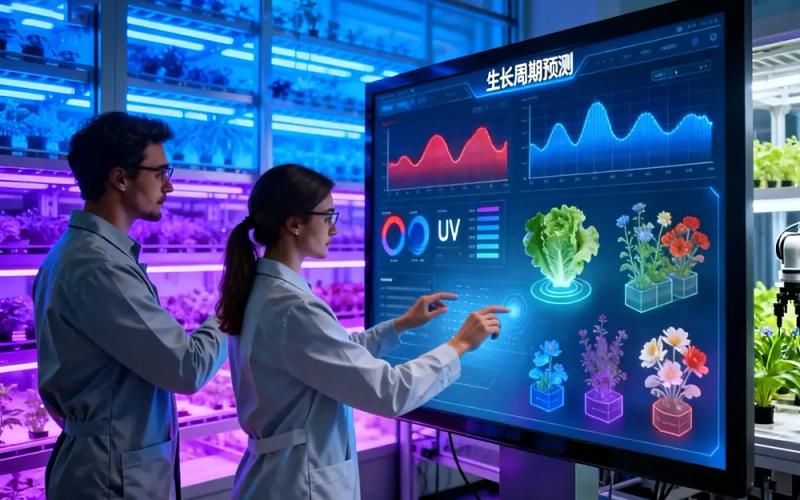
Nature’s lessons are now powering modern agriculture. By decoding how plants read light, NUMBER creates custom light recipes to optimize crops:
- Functional vegetables: High blue light boosts vitamin C and vivid purple-red stems.
- Leafy greens: Red-dominant spectra speed photosynthesis by ~30%, while low far-red keeps seedlings compact and shippable.
- Ornamentals: Blends of UV-A, blue, and red/far-red deepen colors and increase bloom density.
From wild vines mimicking forest neighbors to greenhouse lettuce under algorithm-driven LEDs, light remains the universal language of plants. NUMBER creates personalized solutions for you