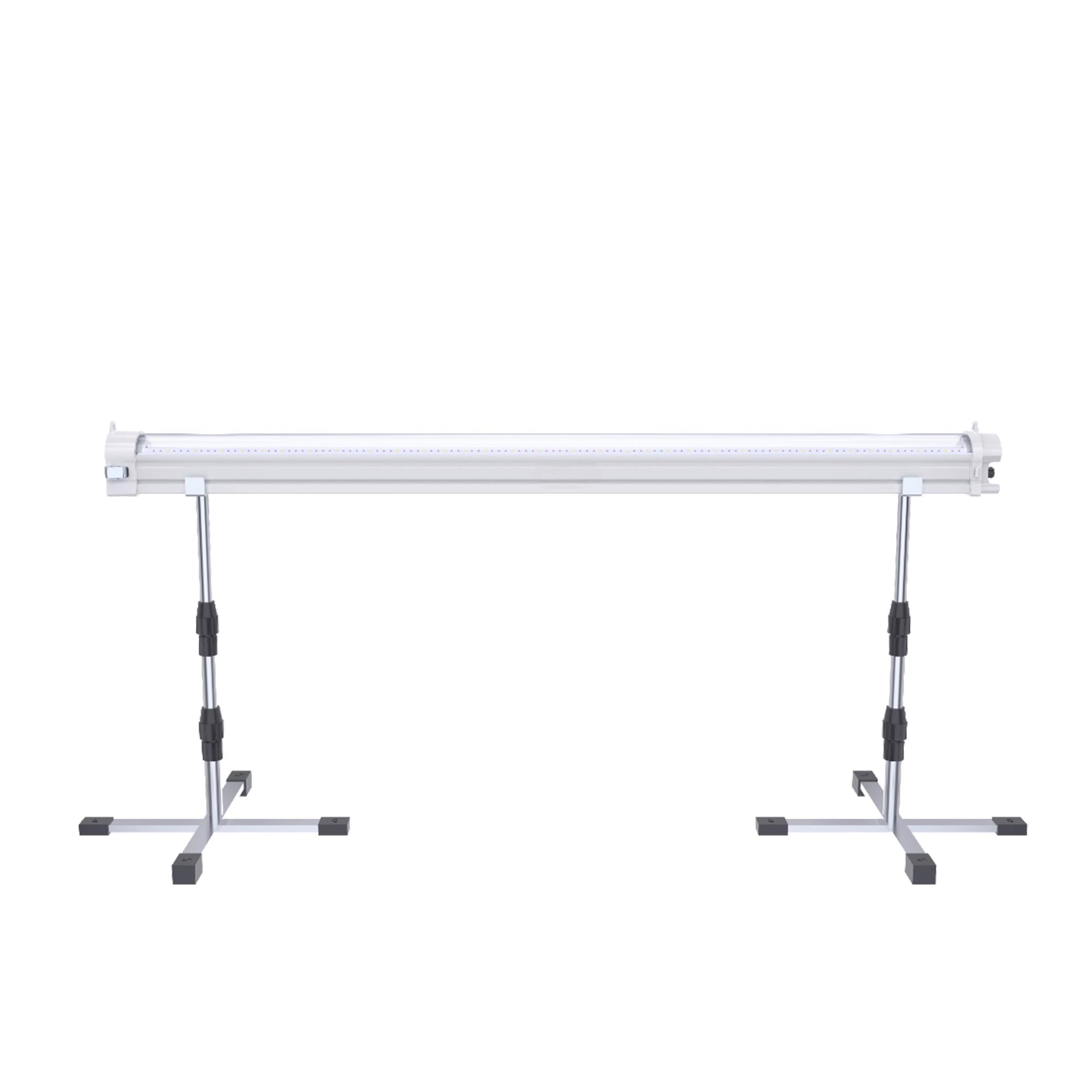
How to Plan Under-Canopy LED Wiring Before Rollout
A commercial checklist for planning under-canopy LED wiring groups using verified F120 specs, chain limits, controls, cabling evidence, and sample approval.
An under-canopy LED rollout is partly a lighting decision and partly a wiring decision. Before a buyer approves room-wide installation, the submittal should state the fixture model, chain length, power grouping, control zone, mounting position, and evidence that the proposed connection method matches the site plan.
1. Separate the pilot result from the rollout wiring plan
A successful trial does not automatically define how every row should be wired. Convert the pilot into a rollout schedule that lists room count, benches or rows per room, fixtures per row, fixtures per circuit group, controller zones, spare units, and the maintenance access path. Keep crop-response observations in the trial record; use the rollout document to control electrical, mechanical, and service details.
2. Anchor the schedule to verified F120 fields
Current Sanity product data for the Number LEDex-F120 DeepLock under-canopy LED grow light lists 120 W +/-5% power consumption, 360 micromoles per second PPF, 3.0 micromoles per joule efficacy, passive thermal management, 0-10 V dimming, -20 C to 35 C operating temperature, 2.5 kg weight, DLC/CE/RoHS certification fields, and a five-year standard warranty. The same product record says the fixture supports 2 ft/4 ft setups and chains up to 20 units. Treat those as model fields to verify on the current quote and datasheet, not as proof of yield, utility eligibility, or compliance for every project.
3. Put the chain limit on the purchase document
The chain limit should be written as a project constraint: maximum fixtures per chain, chains per row, rows per control zone, plug or connector type, cable length, driver location, and where a chain starts and ends. If a room uses fewer than 20 units per chain, state the lower project limit. If a buyer wants to approach the listed limit, request the exact wiring diagram, branch-circuit assumptions, connector rating, and installation instructions before sample approval.
4. Ask for cabling and connection evidence
UL Solutions identifies wiring and connection methods, environmental conditions, ingress protection, and photobiological considerations as critical checks for horticultural lighting equipment and systems. DLC horticultural requirements also show why cabling details matter: fixture wattage, input power, cabling gauge, cabling length, power factor, and tested power-source data can affect a technical submittal. Use those sources as review context, while relying on Number product data only for Number-specific model fields.
5. Match wiring groups to 0-10 V control zones
Because the verified F120 record lists 0-10 V dimming, the wiring plan should show whether each row, bench side, room section, or crop stage is controlled together. Do not let the daisy-chain drawing and dimming drawing drift apart. The purchase packet should include a fixture count table, controller output table, cable map, and commissioning note that names the dimming test the installer will perform before plants are in place.
6. Use OEM review for changes to cable, label, or mounting
If the project needs a non-standard cable length, label artwork, mounting bracket, spectrum discussion, connector packaging, or private-label carton, move those decisions into an OEM/ODM project review. The smallest useful evidence packet is a current datasheet, product drawing, chain-limit note, dimming wiring note, sample inspection checklist, packaging label, and any certification document that applies to the exact quoted configuration.
Buyer checklist
Before rollout, confirm the exact F120 variant, fixture count, maximum chain length, wiring diagram, dimming-zone map, connector and cable details, operating-temperature assumption, cleaning and splash exposure, warranty document, and sample acceptance criteria. If any of those items are missing, approve a sample or evidence packet before approving a room-wide order.
Sources used
First-party product claims came from published Sanity product data retrieved on 2026-08-15 for product 07dfd911-1bba-4d49-a303-6f11468a5c00. General review context came from UL Solutions horticultural lighting guidance and DesignLights Consortium horticultural technical requirements retrieved on 2026-08-15.