How to Request Grow Light Layout Evidence Before Installation
A buyer checklist for requesting grow light layout evidence before approving fixture count, mounting height, control zones, and installation.
A grow light layout should not be approved from wattage and fixture count alone. Before installation, the buyer needs a small evidence packet that connects the exact model row, mounting height, canopy area, control zones, dimming state, and open assumptions. That keeps a quotation from becoming an unverified lighting plan.
1. Separate fixture output from canopy evidence
DLC horticultural requirements treat PPF as total fixture output over the 400-700 nm range and note that it does not include spectral or directional information. The same document reports photosynthetic photon intensity distribution separately. For a buyer, the practical rule is simple: a product PPF row can start the fixture schedule, but it cannot replace a PPFD map or layout assumption sheet at plant height.
2. Lock the exact Number model rows
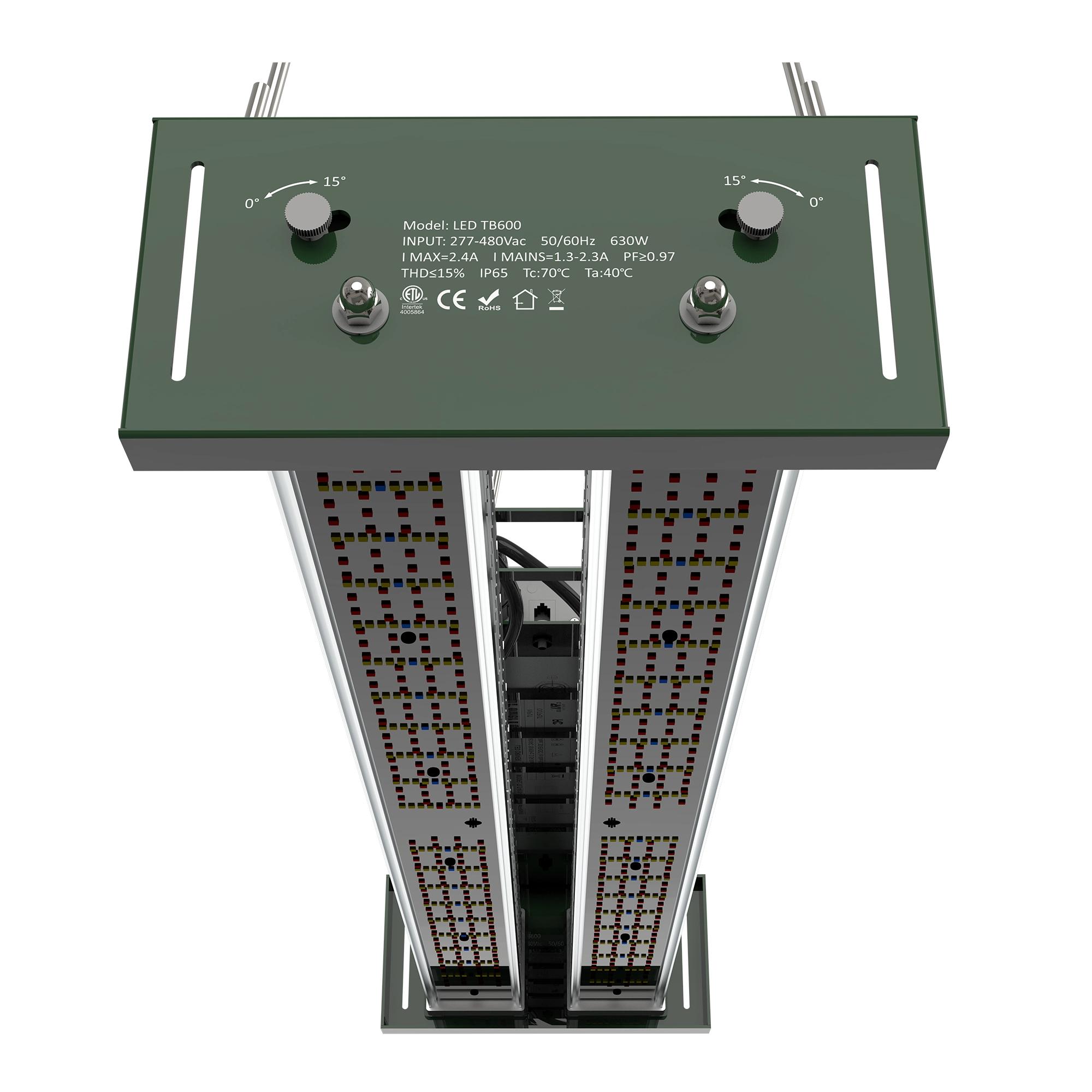
For a greenhouse toplight layout, the current Number LED TB600 product row lists 600 W +/-5% power consumption, 2100 umol/s PPF, 3.5 umol/J PPE or efficacy, 150 degree beam angle, AC 200-480 V input, 0-10V dimming, passive thermal management, -20 deg C to 35 deg C operating temperature, 7.0 kg weight, and five-year standard warranty. For indoor racks or bars, the current Number LEDzx F320 row lists 320 W +/-5% power consumption, 800-930 umol/s PPF, 2.5-2.90 umol/J efficacy, 0-10V dimming, passive thermal management, -20 deg C to 35 deg C operating temperature, 3.5 kg weight, and five-year standard warranty. These are fixture rows; the buyer should still request the project-specific layout inputs.
3. Ask for the PPFD map assumptions
The layout evidence should name the fixture model, power setting, dimming percentage, quantity, row spacing, mounting height, canopy height, target area, reflectance assumptions, obstruction assumptions, and whether the calculation is for a greenhouse, single-level room, or vertical rack. If a PPFD heat map is provided, keep the scale, grid spacing, average, minimum, maximum, and uniformity method beside the drawing so reviewers are not comparing unlabeled images.
4. Convert the layout into an operating question
Virginia Cooperative Extension explains DLI as the total photosynthetic light a plant receives over a day and notes that PPFD is needed to calculate it. That means the layout packet should not stop at a static drawing. Ask how the fixture schedule, dimming level, photoperiod, daylight contribution, and crop target will be reviewed together. For a greenhouse, separate supplemental-light assumptions from sunlight assumptions. For indoor rooms, record the intended light hours and control-zone schedule.
5. Match the evidence to installation constraints
A layout can fail during installation even when the fixture row is correct. Add rows for structure load, fixture weight, bracket type, service clearance, driver access, cable path, connector protection, controller location, and maintenance reach. If the buyer changes cable length, mounting hardware, bar count, spectrum, or dimming interface, the layout evidence should be revised before sample approval or shipment release.
6. Use a short approval table
For an OEM or private-label grow light project, create one approval table with product ID, model name, fixture count, mounting height, spacing, power setting, PPF row, requested PPFD evidence, DLI or photoperiod assumption, control-zone owner, drawing revision, sample revision, and unresolved evidence. Mark unsupported yield, savings, certification scope, rebate, and customer-result statements as blocked until a source document is attached.
Next action: before approving the layout, ask the supplier for the product-row evidence, PPFD map assumptions, control-zone schedule, installation drawing, and a list of claims that still need source documents.