How to Review Grow Light Test Reports Before Sample Approval
A buyer checklist for matching grow light test reports to exact model rows, spectrum options, electrical data, and OEM sample approval evidence.
A grow light test report is useful only when it can be matched to the exact sample a buyer is approving. Before an OEM sample moves into mass production, the report packet should connect the model number, spectrum, power setting, driver or dimming configuration, and measured optical rows to the purchase specification. Otherwise a valid-looking document can still describe the wrong version of the fixture.
1. Match the report to the exact sample identity
The first review step is not the highest PPF value. It is identity control. Ask whether the laboratory report, sample label, quotation, datasheet, carton label, and approval sheet use the same model name, sample code, wattage, spectrum, input-voltage version, dimming method, and revision date. The DesignLights Consortium Level 2 horticultural application guidance is useful context because it tells applicants to communicate the exact luminaire model number that should appear in independent-lab test reports.
2. Start with verified Number product rows
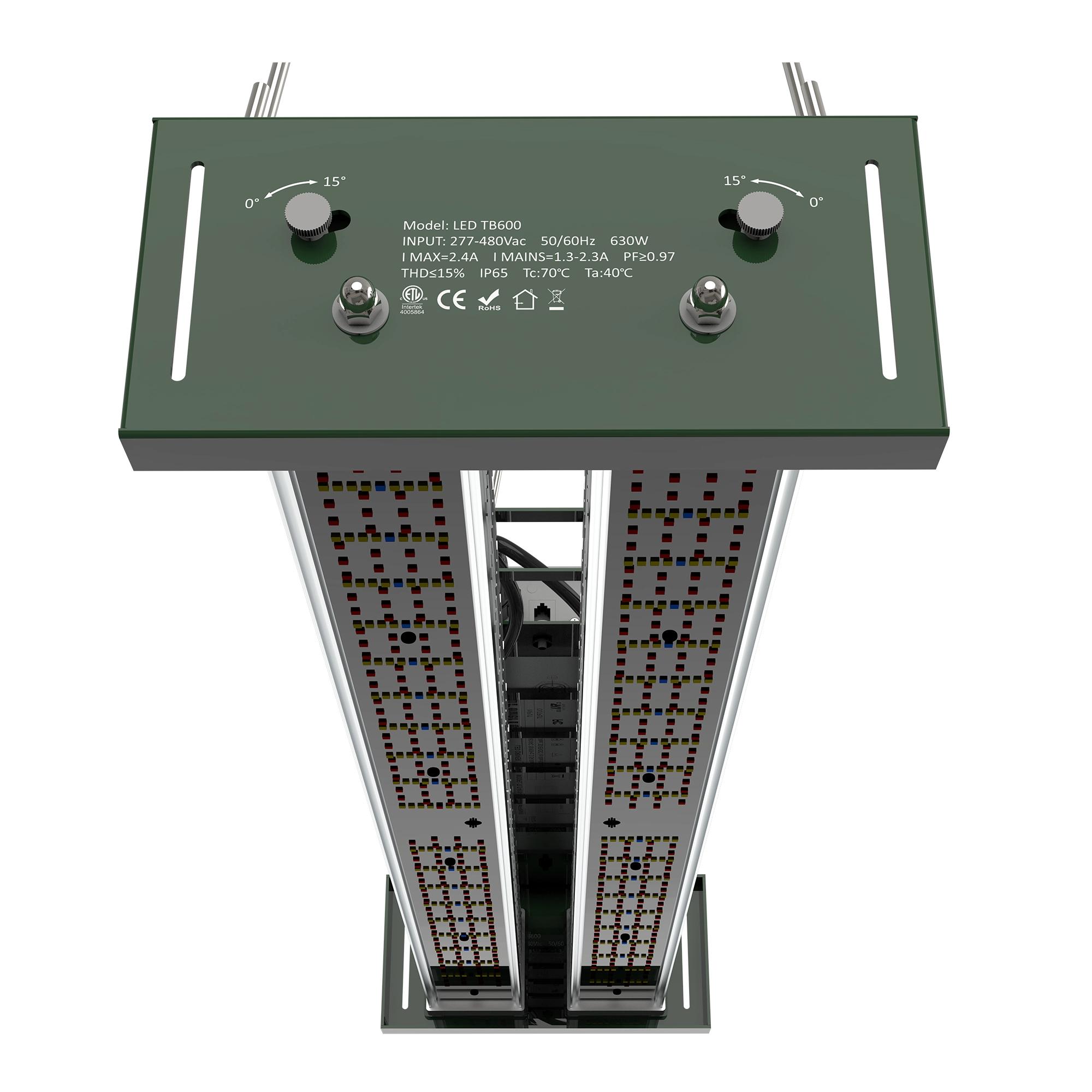
For a greenhouse toplight sample, the current Number LED TB600 record lists 600 W +/-5% power consumption, 2100 umol/s PPF, 3.5 umol/J PPE or efficacy, 150 degree beam angle, full spectrum for greenhouse, AC 200-480 V input, power factor of at least 0.97, 0-10V dimming, passive thermal management, -20 deg C to 35 deg C operating temperature, 7.0 kg weight, and five-year standard warranty. For an indoor foldable fixture sample, the current Number LED JT720F record lists 720 W power, 1950 umol/s PPF, AC 220-240 V input, knob and 0-10V dimming, passive cooling, -20 deg C to 35 deg C operating temperature, 6.6 kg weight, and one-year standard warranty. Its top-level efficiency field lists 2.7 umol/J, while a specification row labeled PPE shows 2.7 umol/s, so buyers should reconcile that unit before approving a test report or datasheet.
3. Treat spectrum changes as new evidence rows
Spectrum is listed as a customizable option on the current TB600 and JT720F records. That supports a spectrum discussion, but it does not prove that every spectrum option has the same PPF, PPE, electrical load, thermal behavior, safety marking, or production readiness. If the buyer requests a red-heavy, white-heavy, UV, IR, or crop-stage-specific spectrum, require a new approval row that names the sample code, LED recipe, optical report, label text, and any changed driver or thermal assumptions.
4. Check what the optical report actually measured
DLC horticultural technical requirements describe reported fixture data such as PPF, PPE, spectral quantum distribution, photosynthetic photon intensity distribution, control capability, and model identity. They also describe spectral and spatial data based on measured data from an accredited lab following LM-79 testing requirements. For a purchasing review, record whether the report is for the complete luminaire, the exact power setting, the submitted spectrum, the same driver or ballast arrangement, and the same control state expected in production.
5. Keep performance and safety evidence separate
A PPF or PPE report does not replace safety, wiring, environmental, ingress-protection, or photobiological evidence. UL Solutions describes horticultural lighting work across safety and performance areas including photobiological effects, UV exposure, ingress protection, wiring, connections, elevated temperatures, and humid environments. Use that as a review boundary: optical performance tells the buyer what was measured; it does not automatically approve the fixture for every market, installation, cleaning method, or worker-exposure condition.
6. Put the report review into the sample approval sheet
Before approving an OEM or private-label grow light sample, create one row for each evidence item: model identity, sample serial or build code, spectrum version, power setting, PPF, PPE, SQD or spectrum file, beam or distribution file if needed, input voltage, dimming state, thermal condition, label artwork, certificate or listing scope if claimed, and the owner who signs off. If a row is missing, mark it as an open evidence request instead of approving by assumption.
Questions to ask before sample approval
Does the report show the same model number and revision as the sample? Does it identify the spectrum and power setting? Are PPF, PPE, and electrical input rows internally consistent? Is dimming fixed at a named setting during the test? Are safety, environmental, and market-compliance claims supported by separate evidence? Are any customized spectrum, logo, cable, color, dimming, or mounting rows clearly separated from standard product rows?
Source note: Product-specific statements were checked against current Sanity records for LED TB600 and LED JT720F on 2026-09-08. External context was checked against DesignLights Consortium horticultural technical requirements and Level 2 application guidance, plus UL Solutions horticultural lighting testing guidance. This article does not claim crop output, energy savings, independent listing scope, utility eligibility, customer outcomes, or competitor comparisons.