How to Specify a Two-Zone 0-10V Grow Light Controller
A practical checklist for specifying a two-zone 0-10V grow light controller using verified SLC controller specs, schedules, ramps, sensors, and documentation.
A two-zone 0-10V controller is useful when a grow room does not need a full building-management system but still needs repeatable dimming schedules, separate lighting zones, and basic protection logic. The buying question is not only whether the controller can dim fixtures. The better question is whether its zone count, schedule logic, sensor plan, and documentation match the room the buyer is trying to operate.
1. Define what each lighting zone must control
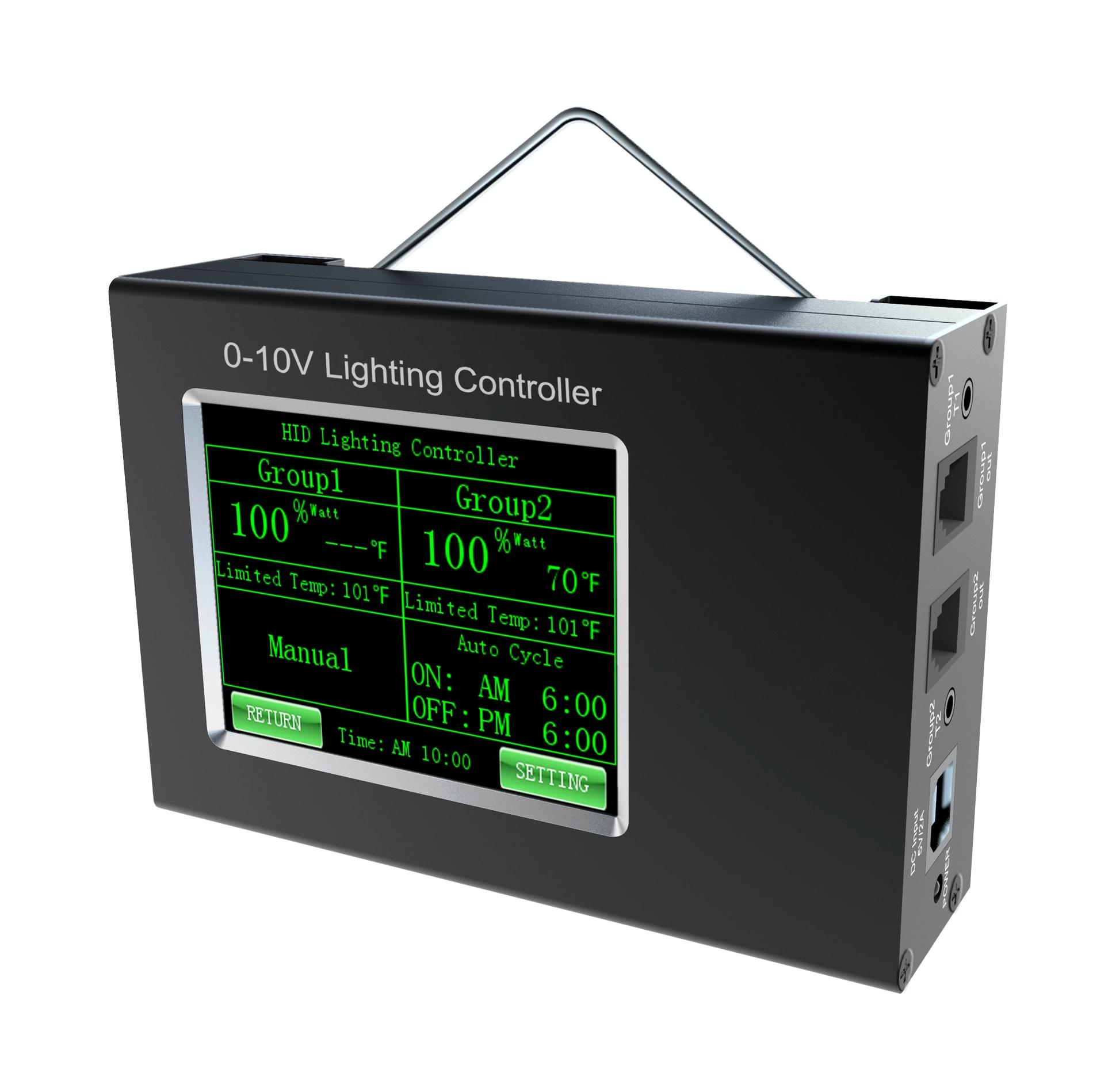
Start with a room drawing and mark the fixtures that must change together. The Number SLC 0-10V dimming controller is listed in Sanity as a 20 W controller for two independent lighting zones, with a single 0-10 V dimming output per channel. That makes it a candidate for rooms where two groups need separate schedules or intensity settings, but not a substitute for a multi-zone control design without confirming the channel count.
2. Specify schedules as crop-light requirements, not button settings
Record the crop, growth stage, target photoperiod, desired canopy PPFD range, blackout rules, and daily light integral target before programming the controller. Virginia Tech Extension describes DLI as the amount of photosynthetic light reaching the plant over 24 hours, so a schedule should be reviewed against the actual light plan rather than treated as a timer-only decision.
The SLC product record states that it cycles on a 24-hour clock and supports programmable 10-60 minute sunrise/sunset ramps. For procurement, that should be written into the specification as required ramp duration, per-zone schedule count, restart behavior after power loss, and who is responsible for commissioning the final program.
3. Confirm fixture and wiring compatibility before ordering
Check that the selected fixtures accept the same dimming protocol, that the control cable length and connector plan are practical, and that the electrician has the wiring diagram before installation. DLC's horticultural lighting technical requirements include product-level controllability and reporting context, but a listing or fixture spec still does not prove that a particular room wiring plan is complete.
For the controller itself, the SLC specification lists 222 x 162 x 32 mm dimensions and 12 V / 1 A power from an included 100-240 VAC adapter. Treat those as controller-installation details, not fixture-load ratings. Fixture power, branch circuits, protection devices, and local electrical rules still need to be specified separately.
4. Decide how room-overheat protection will be used
The SLC product description says each channel offers adjustable room-overheat protection. That is a useful control feature, but it should be specified carefully: where the temperature is measured, what threshold is used, what the lights do when the threshold is crossed, how the room recovers, and whether alarms or climate controls handle the same event.
5. Review interface behavior for dark-cycle discipline
The SLC record states that the unit is managed through an LCD touchscreen that auto-dims after 45 seconds to avoid light-cycle disruption. For a commercial room, confirm who may access the controller, whether the screen location is visible during dark periods, and how settings are documented after changes.
When to move beyond a two-zone controller
If the project requires fixture groups with different spectrum channels, sensor options, or more detailed channel assignments, compare the brief against a multi-channel controller instead. For example, the Number LuxMind 3CH controller is listed with two groups of 0-10 V dimming and RJ11/RJ45 control output for 3-channel dimming, plus optional temperature-sensor support. The right choice depends on the control intent, not on the controller name alone.
Turn the controller brief into a submittal
A complete controller request should include the fixture list, room drawing, zone map, dimming protocol, desired schedule, ramp timing, temperature-protection logic, mounting location, and required documentation. Number can review those details through an OEM/ODM project discussion before the controller is written into a purchase specification.
Source note
Product-specific statements in this article were checked against current Sanity product records for the SLC Controller Number 0-10V Signal Dimming Controller and LuxMind 3CH Controller on 2026-08-01. General DLI and controllability context was checked against Virginia Tech Extension SPES-720 and the DesignLights Consortium horticultural lighting technical requirements page.