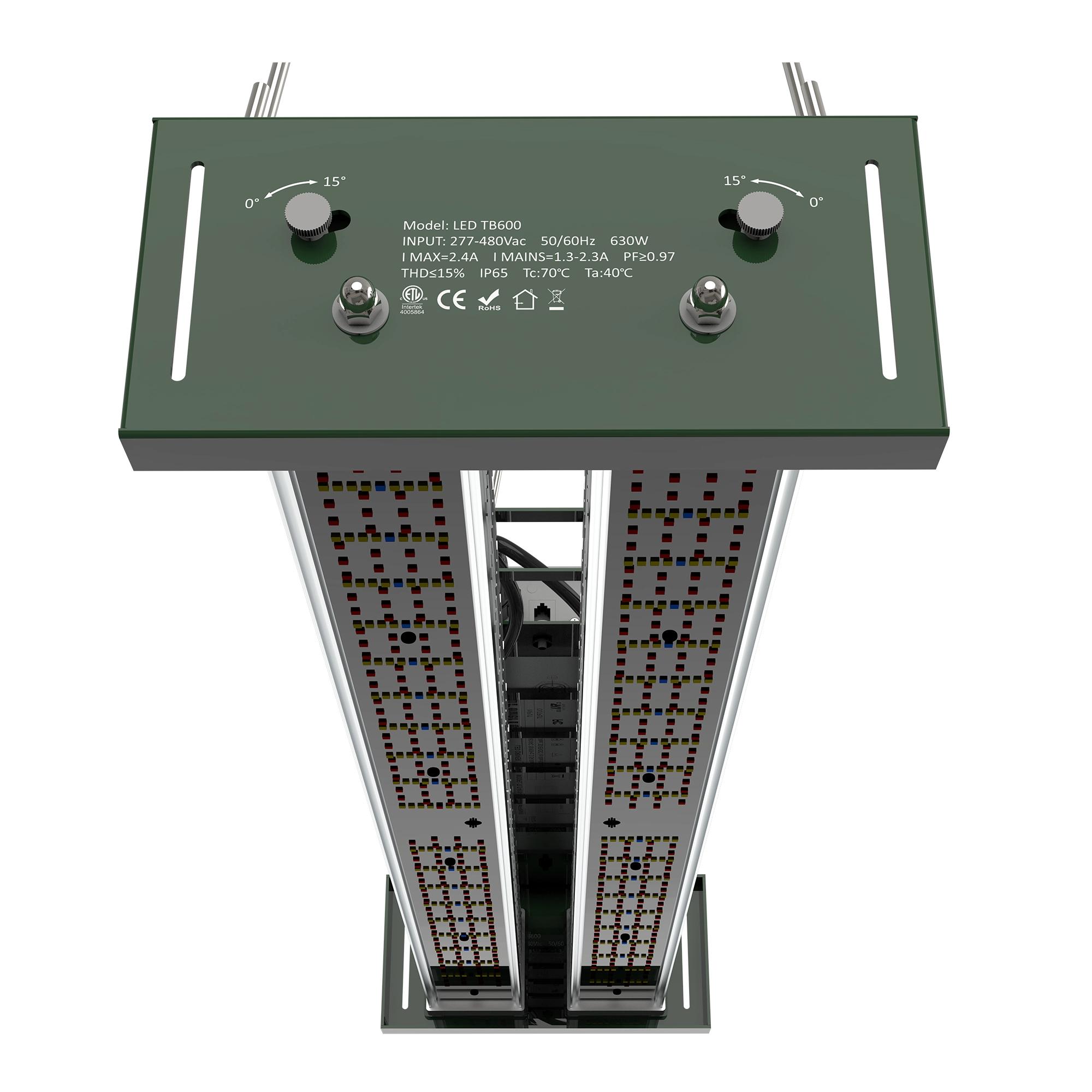
How to Verify Grow Light Driver and Power-Quality Evidence
A buyer checklist for checking grow-light driver, PF, THD, voltage, dimming, and evidence rows before high-output fixture approval.
A high-output grow light should not be approved from wattage and PPF alone. Before a greenhouse or indoor facility releases a purchase order, the buyer should check the driver row, power-quality evidence, input-voltage scope, dimming interface, and document owner for the exact model being quoted.
1. Separate verified model data from missing electrical evidence
Start with the current product record, then mark which electrical fields still need a datasheet, test report, or engineering confirmation. Current Sanity data lists the Number TB600 greenhouse toplight with 600 W +/-5 percent power consumption, 2100 micromoles per second PPF, 3.5 micromoles per joule efficacy, AC 200-480 V input voltage, 0-10 V dimming, passive thermal management, -20 C to 35 C operating temperature, 7.0 kg weight, five-year standard warranty, and a power factor of at least 0.97. That is enough to begin an electrical review, but it is not a substitute for the final model-specific evidence packet.
2. Treat an absent field as an action item
The same review should identify gaps without filling them in. Current Sanity data lists the Number TB830 greenhouse toplight with 830 W +/-5 percent power consumption, 2910 micromoles per second PPF, 3.5 micromoles per joule efficacy, 0-10 V dimming, passive thermal management, -20 C to 35 C operating temperature, 11.2 kg weight, and five-year standard warranty. The current TB830 product row I checked does not show an input-voltage field or a power-factor field. Do not copy those values from TB600; request the TB830 datasheet or approved electrical submittal before using them in a quote, label, utility file, or private-label record.
3. Ask for PF and THD evidence in the same review
DLC Horticultural Technical Requirements V4.0 treat power factor and current total harmonic distortion as electrical-performance and power-quality requirements for qualified LED horticultural fixtures. For a buyer approval sheet, add rows for rated input voltage, measured or reported power factor, THDi, test condition, fixture configuration, driver model or driver option, report date, and the person responsible for the file. If any row is blank, mark the order as waiting on evidence rather than turning the catalogue value into a promise.
4. Connect driver options to ordering codes
Driver substitutions can change the review even when the fixture name stays similar. DLC V4.0 also warns that model numbers should represent product options clearly, including voltage and driver variations when they affect performance or ordering. For Number OEM or private-label work, the approval row should name the base fixture, requested voltage range, dimming method, driver option, label text, and whether the change creates a new sample or a separate product record.
5. Keep power-quality review tied to the installed environment
UL Solutions describes horticultural lighting evaluation as covering environmental conditions, ingress protection, UV exposure, and wiring or connection methods, not only optical output. That matters for driver review because greenhouse rows may combine high humidity, long cable runs, repositioned fixtures, dimming circuits, and service-voltage differences. Record where the driver sits, how cables are routed, what connector or plug is used, and whether the final assembly has the same evidence as the base fixture.
6. Use a release table before PO approval
A practical release table has one row each for product ID, fixture name, wattage, PPF, PPE, input voltage, power factor, THDi, dimming method, driver option, warranty term, certification evidence owner, label or nameplate revision, and missing documents. For customized orders, send that table with the OEM/ODM project inquiry so procurement, engineering, and the factory are reviewing the same electrical evidence before sample approval or shipment release.
Next action
Before approving a high-output fixture order, ask Number for the current model record, datasheet, electrical test or reporting evidence for PF and THDi where required, driver option, dimming row, label draft, and owner for any missing field. Product-specific statements here were checked against current Sanity records for TB600 and TB830 on 2026-09-06. This article does not claim crop yield, energy savings, independent certification scope, customer results, utility eligibility, competitor comparisons, lead time, MOQ, or financial return.