How to Specify an Adjustable Under-Canopy LED Grow Light
A practical checklist for specifying adjustable under-canopy LED grow lights using verified DeepLock F120 specs, placement geometry, controls, and pilot evidence.
An adjustable under-canopy LED grow light should be specified as part of a measured pilot, not as a generic add-on below the crop. The buyer needs to know where the light will sit, how the support will remain stable, which lower-canopy area is being measured, and which evidence will decide whether the trial should scale.
1. Define the under-canopy job before choosing a fixture
Start by naming the constraint: shaded lower canopy, side-light access, crop handling clearance, or a controlled comparison against the current room. The Number LEDex-F120 DeepLock under-canopy fixture is listed in current Sanity product data as a 120 W fixture with 360 micromoles per second PPF and 3.0 micromoles per joule efficacy. Use PPFD and DLI measurements at the target leaves to define the trial because University of Missouri Extension describes PPFD as the instantaneous light at the plant level and DLI as the daily accumulated light.
2. Check physical geometry, not only wattage
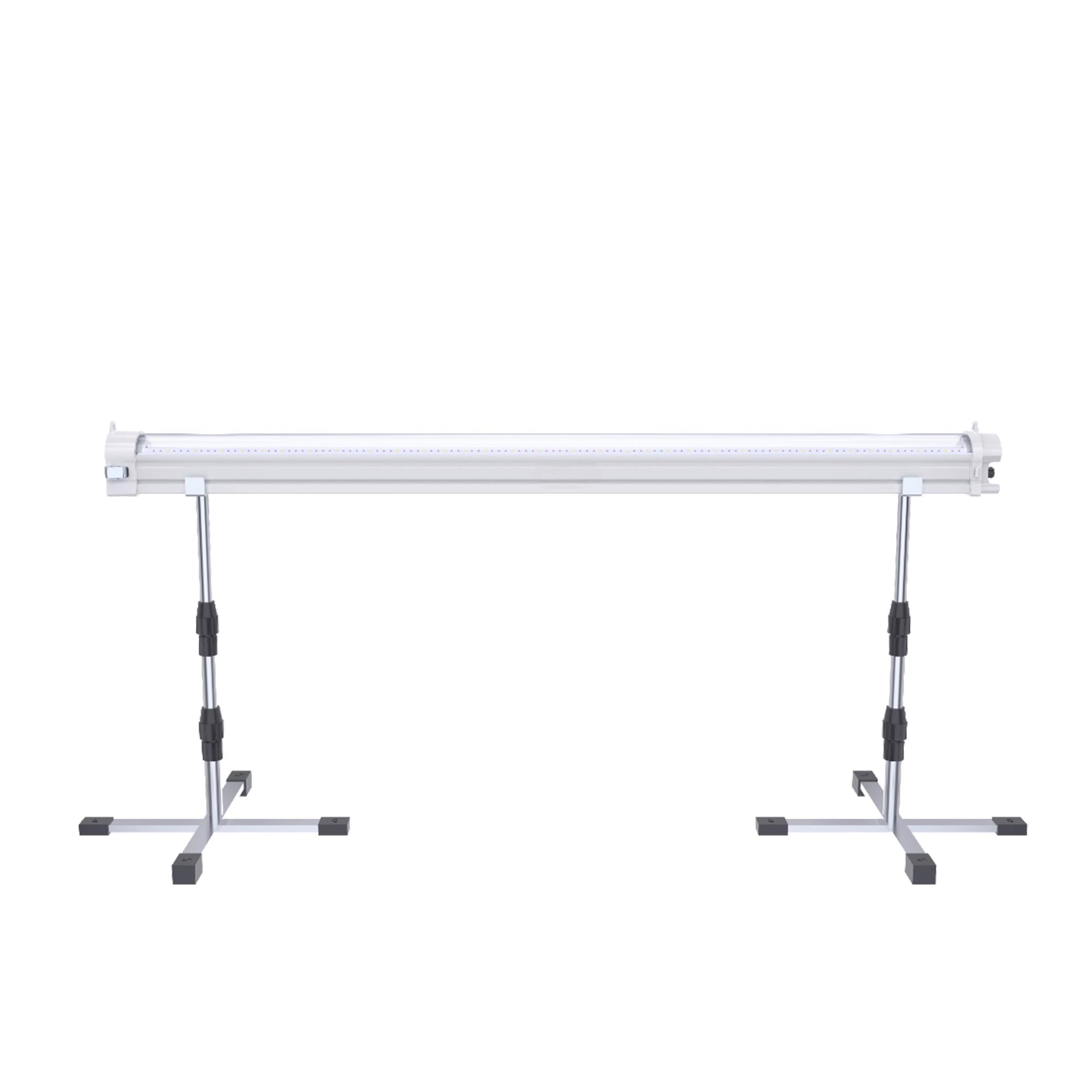
For an adjustable under-canopy fixture, the support height and plant-workflow clearance are part of the specification. The current product record lists a triangular support design, foldable storage, and adjustable height from 255 mm to 554 mm. Before purchase, record the bench width, aisle access, irrigation hardware, rolling table movement, spray routines, and the minimum clearance needed for staff to work without shifting the light position.
3. Design the pilot so the result is usable
A peer-reviewed subcanopy and inter-canopy supplemental lighting study evaluated the topic because dense canopies can leave lower plant material in a different light environment. Treat that as biological rationale, not as a yield promise for your room. A useful pilot should compare matched areas, log top-canopy and lower-canopy readings, keep cultivar and crop work consistent, and define pass/fail evidence before installation. For the broader measurement plan, use the under-canopy LED pilot checklist as the decision framework.
4. Verify controls, environment, and service limits
The DeepLock F120 product record lists 0-10 V dimming, passive thermal management, an operating temperature range of -20 C to 35 C, 2.5 kg weight, and a five-year standard warranty. It also lists DLC, CE, and RoHS in the certification field. Do not translate those fields into project guarantees. Confirm the actual datasheet, plug type, cable route, dimming controller compatibility, cleaning exposure, and warranty terms for the shipment configuration being quoted.
5. Ask for the evidence packet before scaling
For a commercial rollout, request a simple evidence packet: current specification sheet, fixture drawing, installation photo or sample setup, dimming wiring note, label information, and the measurement template the cultivation team will use during the trial. If the fixture needs a different cable length, label, mounting detail, or spectrum discussion, move the project into an OEM/ODM specification conversation before approving a multi-room purchase.
Next action
Send the lower-canopy target area, crop stage, bench dimensions, and desired dimming/control method with the inquiry. Number can then check whether the adjustable DeepLock F120 configuration fits the trial or whether a customized under-canopy setup should be specified first.