How to Verify Grow Light Over-Temperature Control Evidence
A controller handover checklist for documenting grow-light over-temperature setpoints, fail-state behavior, sensor rows, and release owners.
Over-temperature control should be approved as a documented controller behavior, not as a vague safety promise. Before a grow-light controller is handed over, the buyer should know which sensor is used, what temperature row triggers an action, which fixture group is affected, what the controller does when the threshold is crossed, and who signs off after recovery.
1. Start with the exact controller row
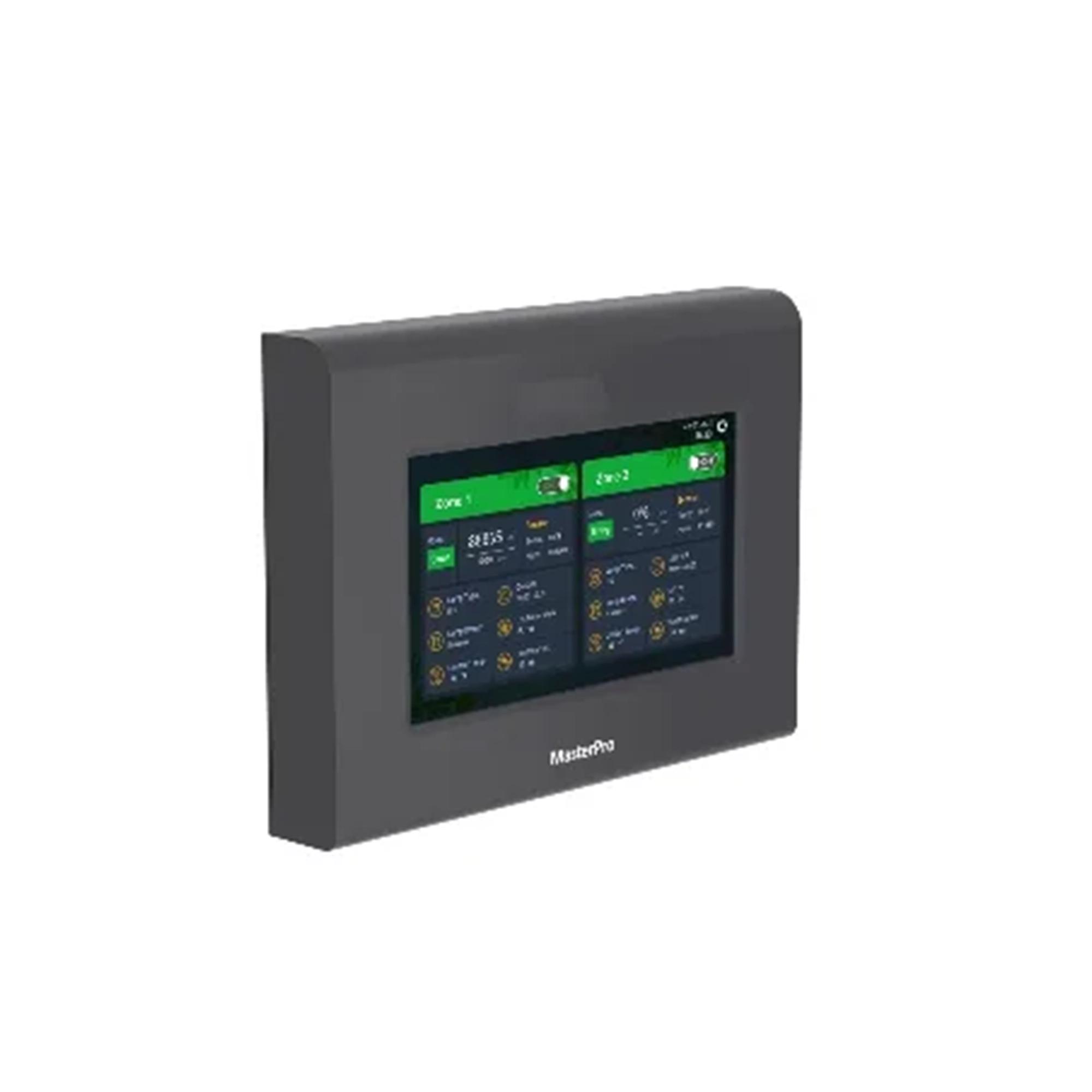
Current Sanity data lists the Master Pro RS485 controller with 12 V / 1 A power using a 100-240 VAC adapter, 2-way RS485 output, 7 inch 1024 x 600 display, -20 C to 40 C and 0-90 percent RH operating range, IP54 protection, 20000 h listed lifespan, and two-year warranty. Its product text states that output can be adjusted according to time period, target lighting intensity, and sensor-collected lighting intensity, and that an over-temperature protection function turns the light output off until temperature recovers. Current Sanity data lists the SLC 0-10 V controller with 222 x 162 x 32 mm dimensions and 12 V / 1 A power using a 100-240 VAC adapter; its short description describes two independent lighting zones, programmable 10-60 min sunrise and sunset ramps, adjustable room-overheat protection, and an LCD touchscreen that auto-dims after 45 seconds. Use these fields as controller identity evidence, not as proof that a project-specific setpoint has been commissioned.
2. Record the setpoint, sensor, and affected output
The approval sheet should name the temperature sensor, sensor location, controller input, controller output, fixture group, room or greenhouse zone, threshold value, hysteresis or recovery rule if supplied, and expected output state. This is easiest when the team already has a grow light controller I/O schedule that maps sensors, outputs, and zones before ordering. If the setpoint only appears in a chat message or commissioning screenshot, it is not yet controlled evidence.
3. Define the fail-state in buyer language
Write what the grower will see when the threshold is crossed: turn affected output off, dim to a stated level, hold the previous schedule, require manual restart, resume automatically after recovery, or create an alarm row for review. DLC NLC V5.2 materials describe system-level control strategies such as zoning, continuous dimming, scheduling, scene control, and configuration reporting. Use that as a documentation habit for commercial controls. Do not turn it into a claim that a horticultural controller is listed, incentive-eligible, or compliant unless the exact system and listing evidence are in the project file.
4. Keep environmental evidence separate from crop promises
Over-temperature rows often sit beside humidity, ingress, wiring, connector, and mounting questions. UL Solutions horticultural lighting guidance points to environmental, ingress, wiring, and connection considerations for horticultural lighting equipment. Purdue Extension explains DLI as accumulated light over a day, which is why a controller change can affect the light plan. Still, the over-temperature sheet should not promise crop yield, energy savings, or plant-response outcomes. It should simply state what the controller does and what evidence proves it.
5. Build a handover row before acceptance
A practical handover row includes controller model, product ID, firmware or menu version if supplied, zone name, fixture group, sensor model or location, threshold value, recovery rule, output action, manual override rule, alarm or screenshot evidence, commissioning date, person who tested the row, open exceptions, and release owner. If one of those fields is unavailable, mark it as an evidence request instead of approving the controller by assumption.
Source note: Product-specific statements were checked against current Sanity records for the Master Pro RS485 controller, SLC 0-10 V controller, and LuxMind 3CH controller on 2026-10-14. External context was checked against DLC NLC V5.2 materials, UL Solutions horticultural lighting guidance, and Purdue Extension greenhouse DLI guidance. This article does not claim independent testing, certification scope, crop-output gains, utility-cost reductions, emergency-system compliance, or field outcomes.